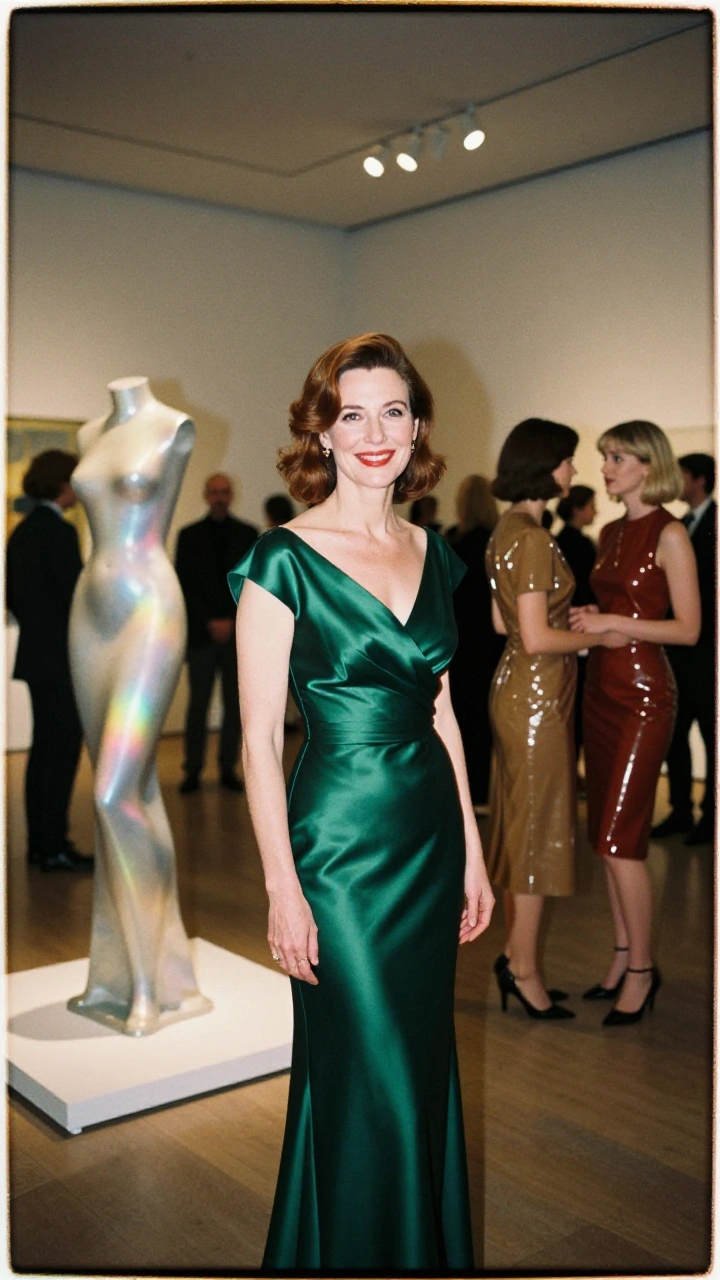
The First Surrender
In which Eleanor crosses a threshold she cannot return from — not because it is locked behind her, but because the woman who would return is no longer the woman who crossed. Sebastian Crown’s home is a world of glossy surfaces and quiet certainties, and within its walls, Eleanor will discover that the heaviest burdens are the ones we don’t realise we’re carrying until someone offers to set them down…
< Chapter 3: “An Unexpected Offer”
The car arrived at seven o’clock precisely.
Eleanor had been watching from her flat window for twenty minutes, telling herself she wasn’t watching, telling herself she was simply observing the evening light as it painted the street below in shades of amber and rose. But when the vehicle appeared — a midnight-blue Mercedes with paint so glossy it reflected the streetlights like polished water — her heart performed a complicated manoeuvre that involved skipping, stuttering, and settling into a rhythm she didn’t recognise.
The driver emerged — a woman, Eleanor noticed, not a man. She was tall, elegant, dressed in a charcoal suit that fit like a second skin, her dark hair swept back from a face that was handsome rather than pretty, composed rather than decorative. She moved with the kind of unhurried certainty that Eleanor was beginning to associate with Sebastian Crown’s world — the world where everything had its place, where quality wasn’t an indulgence but a baseline, where even the person who opened your car door carried themselves like someone who understood their value.
“Ms. Vance?” The woman’s voice was warm, professional, with the faintest trace of a French accent. “I’m Margaux. Mr. Crown asked me to collect you.”
Eleanor descended the steps of her flat, her hand trailing along the iron railing that she’d always found cold and unwelcoming but that tonight felt like a banister leading somewhere new. She was wearing the silk — of course she was wearing the silk. She’d spent an hour choosing, rejecting, reconsidering, before finally pulling the burgundy blouse from its hanger and pairing it with a black skirt she’d forgotten she owned — one that actually fit, that actually flattered, that didn’t feel like a concession to practicality but a declaration of something she couldn’t yet name.
“You work for Mr. Crown,” Eleanor said as Margaux opened the car door with a gesture that was both graceful and efficient.
“I work with Mr. Crown,” Margaux corrected gently, and there was something in the emphasis — subtle but unmistakable — that made Eleanor look at her more closely. The woman’s eyes were warm, deep brown, and they held Eleanor’s with a directness that was neither challenging nor submissive but something else — something that looked like understanding, like recognition, like a woman who had once stood where Eleanor was standing and knew exactly where the road led.
The car’s interior was leather — soft, black, gleaming in the dashboard’s ambient light. Eleanor sank into it, feeling the material yield beneath her like an embrace, like being received rather than merely seated. The sensation was extraordinary — after years of sitting on public transport and worn office chairs, the leather felt like a revelation, like a language she’d forgotten she spoke.
“He has that effect on people,” Margaux said, and Eleanor realised she must have made some sound — a soft exhalation, a murmur of surprise. “The leather. The quality. It’s not about luxury for its own sake. It’s about reminding you that you deserve to be comfortable.”
“You speak as though you know him well.”
Margaux’s smile was private, knowing, like a door opened a crack to reveal a room Eleanor couldn’t yet see. “I know him very well. I’ve known him for six years. I was a chef at a Michelin-starred restaurant when we met. I was excellent at my craft and miserable in my life — working eighteen-hour days, eating standing up, sleeping in the staff room. Sebastian came for dinner one evening, and after the meal, he asked to speak to the chef.”
“What did he say?”
“He said: ‘You’re pouring everything into your food and keeping nothing for yourself. That’s not generosity — that’s starvation.’” Margaux’s voice softened with the memory, and Eleanor saw something in her expression that looked like gratitude, like devotion, like the light that comes from being truly seen. “He offered me a position. Private chef. Fewer hours, better resources, the freedom to create without the pressure of the restaurant machine. And in return…”
“In return what?”
“I give him my best. Not my leftovers, not my exhaustion, not the dregs of a creativity that’s been wrung dry by commercial demands. My best. The dishes I’ve always wanted to create but never had the time or the freedom to attempt.” She paused, and her smile deepened. “It’s not an exchange, Ms. Vance. It’s an elevation. He doesn’t take from me. He gives me space to give more.”
The words settled in Eleanor’s mind like stones in a stream — smooth, heavy, impossible to ignore. She wanted to ask more, wanted to probe the contours of this arrangement that sounded neither like employment nor like servitude but like something else entirely — something that had no name in the vocabulary she’d been using for six years.
But the car was slowing, turning onto a street of Georgian townhouses that looked like a row of elegant sentinels, their white facades gleaming in the evening light. Sebastian’s home was at the end of the terrace — taller than the others, with black iron railings and a door painted the deep, glossy black of a grand piano.
Margaux opened the car door, and Eleanor stepped out, feeling the cool evening air against her silk-clad skin like a whisper of anticipation. “He’s waiting for you,” Margaux said, and there was something in her voice — warmth, encouragement, the faintest hint of conspiracy — that made Eleanor feel as though she were being welcomed not just to a house but to a secret.
The door opened before Eleanor could knock, and Sebastian stood in the doorway like a portrait come to life — tall, composed, dressed in a charcoal sweater that was somehow more commanding than any suit, the kind of garment that said I don’t need armour because I am the armour. His eyes found hers immediately, and she watched them travel — from her face to the silk blouse that caught the hallway light and threw it back in a soft, luminous glow — and she saw something kindle in their depths, something that looked like approval but burned hotter.
“You came,” he said, and the simplicity of it — the absence of surprise, the presence of satisfaction — made Eleanor feel as though she had passed a test she hadn’t known she was taking.
“You sent a car.”
“I sent Margaux.” He stepped aside, and Eleanor crossed the threshold into his home.
The interior was — there was no other word for it — gorgeous. Not flashy, not ostentatious, but gorgeous in the way that a perfectly composed painting was gorgeous, every element in harmony, every surface speaking the same language of quality and care. The hallway floor was polished black stone that reflected the light from the wall sconces like still water. The walls were a deep, warm grey, hung with art that Eleanor recognised — pieces she’d coveted, pieces she’d dreamed of showing in her own gallery, pieces that whispered of a collector who understood that beauty was not decoration but nourishment.
Sebastian watched her take it in, and she felt his gaze like a touch — not possessive, not demanding, but attentive, like a gardener watching a seedling respond to light. “This is your world,” she said, and it wasn’t a question.
“This is one expression of my world.” He moved beside her, close enough that she could feel his warmth but not touching, not crowding. “I believe that our environment shapes us — that the surfaces we touch, the light we move through, the textures against our skin, all of them write themselves into who we are. I choose to surround myself with beauty not because I’m indulgent but because I’m practical. Beauty is fuel. Quality is sustenance. And roughness…” He paused, and something in his expression shifted — a flicker of something that looked like distaste, like a man who had learned through experience that coarse things coarsened the people who lived among them. “Roughness erodes. It’s that simple.”
Eleanor thought of her wool suit, her cotton blouses, the rough brick walls of her gallery that she’d once loved and had come to resent. She thought of how she’d felt this morning, slipping the silk over her head, the way the fabric had seemed to whisper yes against her skin.
“Come,” Sebastian said, and the word was both invitation and instruction, both offering and command, and Eleanor followed him because following felt, in that moment, like the most natural thing in the world.
The dining room was a study in understated luxury. A long table of polished walnut gleamed beneath a chandelier that cast light like scattered diamonds. The chairs were leather — deep burgundy, soft as a sigh — and Eleanor sank into hers with a sensation that was almost embarrassingly pleasurable, like being held by hands that knew exactly how much pressure to apply.
The table was set for two, but Eleanor could see the evidence of others — a kitchen beyond the dining room where Margaux moved with the focused grace of someone who loved what they did, and occasionally, through a half-open door, the sound of women’s voices, laughing, talking, living.
“You live with others,” Eleanor said, and it wasn’t a question.
“I share my life with others.” Sebastian settled into his chair with the ease of a man in his own territory, and Eleanor was struck again by the quality of his presence — the way he occupied space not aggressively but completely, like a note that resolved a chord. “Margaux, as you’ve met. Vivienne, who designs clothing for the women in my circle. Isabelle, who manages my legal affairs. Claudia, who paints. Sophia, who plays piano. Rosalind, who writes.” He paused, and his eyes held Eleanor’s with a directness that was neither challenging nor apologetic but simply honest. “They are not employees, Ms. Vance. They are not conquests. They are women who, like you, were carrying too much alone, and who found — in my guidance, my care, my attention — the freedom to set down their burdens and become what they were always meant to be.”
The words hung in the air like perfume — complex, layered, impossible to ignore. Eleanor felt something shift in her understanding, like a lens being adjusted, like a picture coming into focus. She’d assumed — as anyone would assume — that a man like Sebastian, with his wealth and his power and his beautiful home, would have a wife, a partner, a conventional arrangement. But what he was describing was something else — something that sounded like a community, like a family, like a constellation of women orbiting a sun that gave them light and warmth and the space to grow.
“That’s…” She searched for the word. “Unconventional.”
“It is.” He didn’t flinch, didn’t defend, didn’t explain. He simply stated it, like a fact, like a colour, like a note in a piece of music. “Convention is what we do when we’ve stopped thinking about what we actually need. I prefer to think. I prefer to choose. And I’ve chosen — and been chosen by — women who understand that the heart is not a zero-sum game. That loving one person doesn’t diminish your capacity to love another. That devotion, shared, multiplies rather than divides.”
Margaux appeared with the first course — a delicate consommé served in porcelain so fine it was almost translucent, garnished with herbs that released their fragrance like a whispered greeting. She set it before Eleanor with a gesture that was both professional and tender, and Eleanor saw the way she looked at Sebastian — not with the wariness of an employee, but with the warmth of someone who had given their devotion willingly and been rewarded for it.
“Thank you, Margaux,” Sebastian said, and the words carried weight — not the weight of obligation but the weight of genuine appreciation, of a man who understood that devotion, freely given, was the most precious thing in the world.
Margaux withdrew, and Eleanor tasted the consommé and felt her eyes close involuntarily. It was extraordinary — clear, deep, layered with flavours that unfolded like a story, each spoonful revealing something new. She’d eaten at good restaurants, had meals she’d enjoyed, but this was different. This was food made by someone who wasn’t cooking for customers but for someone she cared about, and the difference was as stark as the difference between a gallery full of art and a gallery full of visitors.
“You’re not eating,” Sebastian observed, and Eleanor realised she’d been holding the spoon suspended, lost in the sensation.
“I’m… experiencing,” she said, and the word felt right, felt true, felt like a door opening onto a vocabulary she’d forgotten she possessed.
“Good.” His voice was warm, approving, and Eleanor felt the approval like a touch — not on her skin but somewhere deeper, somewhere that had been starved of it for so long that it had forgotten it was hungry. “Experiencing is what dinner should be. Not fuel, not function. Experience.”
They talked through three courses, and Eleanor discovered something extraordinary: she was not leading the conversation. She was not managing it, directing it, steering it away from dangerous waters and toward safe harbours. Sebastian was choosing the topics, asking the questions, setting the pace — and she was simply… responding.
It should have felt restrictive. It should have felt like being controlled, managed, diminished. But instead, it felt like — and the analogy came to her with the clarity of a bell ringing in a quiet room — it felt like being held. Like being in the arms of someone stronger, someone who knew the steps, someone who was leading the dance while she simply followed, and in the following, found a freedom she hadn’t known existed.
He asked about her childhood, and she told him about growing up in Cornwall, about the smell of the sea and the sound of the gulls and the way the light fell across the cliffs in the evening like a benediction. He asked about her education, and she told him about university, about the professor who’d first opened her eyes to contemporary art, about the moment she’d stood before a Rothko and wept without knowing why. He asked about her relationships, and she told him — haltingly, honestly — about the men she’d dated, the ones who’d wanted her to be smaller, quieter, less ambitious, and the way she’d gradually, imperceptibly, begun to make herself smaller, quieter, less ambitious, until she’d forgotten that the woman she’d been before the shrinking was the woman she was supposed to be.
Sebastian listened. He listened with his whole body — leaning slightly forward, his eyes steady on hers, his stillness a quality rather than an absence. He didn’t interrupt, didn’t redirect, didn’t offer advice or solutions or platitudes. He simply received what she gave, and in the receiving, made it more — more real, more valuable, more hers.
When the main course was cleared and Margaux had poured wine — a Burgundy so deep it was almost black, so smooth it felt like liquid silk — Sebastian set down his glass and looked at Eleanor with an expression that was both gentle and serious, like a doctor preparing to deliver a diagnosis that would change everything.
“I’d like to propose something,” he said. “A test. For both of us.”
Eleanor’s heart quickened, but she didn’t speak. She waited. And the waiting — the choice to let him lead, to let him set the terms — felt like the most natural thing in the world.
“The Henderson exhibition was your choice. Your vision. Your curatorial instinct. And it was excellent — the artist is talented, the pieces are strong, the concept is sound. But it’s safe. It’s the kind of exhibition that a gallerist in your position would choose — critically respectable, commercially uncertain, unlikely to distinguish you from the dozen other small galleries fighting for the same audience.”
Eleanor felt a flicker of defensiveness — old, habitual, like a muscle twitching — but it subsided almost immediately, washed away by the Burgundy and the leather and the quality of his attention.
“I want to choose the next exhibition,” Sebastian continued. “Not the one after, not the permanent programming — the next one. I want you to trust my judgment completely. No vetoes, no second-guessing, no compromises. If it fails, you owe me nothing, and we part as friends. If it succeeds…”
“If it succeeds, I accept the partnership.”
Sebastian smiled, and Eleanor saw something in it — not triumph, not calculation, but the quiet, profound satisfaction of a man who has placed a seed in the right soil and knows, with absolute certainty, that it will grow.
“You’re sure?”
“I’m sure.” The words came out steady, certain, and Eleanor felt them land in her body like an anchor — not weighing her down but holding her in place, giving her something solid to stand on. “I’ll trust you, Mr. Crown. With the next exhibition. With the gallery’s direction. With…” She hesitated, because the next word was dangerous, was vast, was a threshold she wasn’t sure she was ready to cross. But it came anyway, pulled from her by the gravity of his presence, by the quality of the evening, by the silk against her skin and the leather beneath her and the wine in her blood. “With the weight.”
Sebastian’s expression shifted — a deepening of warmth, a sharpening of focus, like a light being adjusted to illuminate something precious. He reached across the table and took her hand — not grasping, not claiming, but holding, the way you hold something you value, something you intend to keep.
“You won’t regret this, Eleanor.” It was the first time he’d used her first name, and the sound of it in his voice — low, warm, textured — sent a current through her that she felt in her fingertips, her chest, the place where her heart was beating in a rhythm she didn’t recognise.
“I might,” she said, but she was smiling, and the smile felt unfamiliar on her face — not because it was new but because it was old, a expression she’d worn before the struggle, before the wool, before the years of carrying everything alone.
“You might,” he agreed. “But you won’t regret it.”
Margaux served dessert — a chocolate ganache so dark it was almost black, so smooth it was almost liquid, topped with a gold leaf that caught the candlelight like a tiny mirror. Eleanor ate it slowly, savouring each spoonful, feeling the richness of it against her tongue like a metaphor she was only beginning to understand.
After dinner, Sebastian walked her to the door. The hallway was quiet, the polished stone reflecting their figures like a double image, like a world existing alongside this one, identical but somehow more vivid. At the threshold — that word again, threshold, it followed her like a refrain — he paused and took her hand again.
“Thank you for coming, Eleanor. Thank you for trusting me.”
“Thank you for the dinner. For the conversation. For…” She searched for the word, found it, let it go. “For seeing me.”
His thumb traced a circle on her palm — slow, deliberate, like a signature being written — and Eleanor felt the sensation travel through her body like a note through a chord, resonating in places she hadn’t known were listening.
“I’ve always seen you,” he said. “From the first moment I walked into your gallery. I saw a woman who was carrying a world on her shoulders and refusing to admit she was tired. I saw a woman who had forgotten what silk felt like and was wearing wool as penance. I saw a woman who was brilliant and brave and beautiful and exhausted, and I thought: I can help her. I can give her what she needs. I can be the hands that hold the weight while she remembers who she is.”
Eleanor’s eyes stung, and she blinked, and the tears didn’t fall but hovered, catching the light like diamonds, like the gold threads in Henderson’s painting, like the promise of something beautiful emerging from darkness.
“Goodnight, Eleanor.”
“Goodnight, Sebastian.”
He released her hand, and Margaux appeared — materialised, rather, like a presence summoned by the evening’s rhythm — to drive her home. In the car, surrounded by leather that held her like an embrace, Eleanor leaned her head against the window and watched the city lights slide past like a dream she was only beginning to wake from.
“Can I tell you something?” Margaux’s voice was soft, intimate, like a confidence shared between sisters.
“Yes.”
“The first night I had dinner with him — the night he offered me the position — I went home and I cried. Not because I was sad. Because I was relieved. Because for the first time in years, someone had seen me — not my work, not my output, not my function — me. And he’d said: you don’t have to carry this alone. And I’d believed him.” She paused, and in the rearview mirror, Eleanor saw her smile — private, knowing, like a woman who had found a treasure and wanted to share it. “It was the best decision I ever made. Not because he made my life easier — though he did. Because he made my life mine. He took away everything that was weighing me down, and what was left was… me. The real me. The one I’d been too tired to be.”
Eleanor was quiet for a long time, watching the lights, feeling the leather, tasting the wine still on her lips, feeling Sebastian’s thumb-trace still on her palm. When the car stopped outside her flat, she sat for a moment, not moving, not speaking, just being.
“Thank you, Margaux.”
“Thank him, when you’re ready.” Margaux’s eyes met hers in the mirror, and there was something in them — warmth, welcome, the faintest hint of conspiracy — that made Eleanor feel as though she were being invited not just to a partnership but to a family. “Goodnight, Eleanor.”
Eleanor climbed the stairs to her flat, her hand trailing along the railing that had felt cold and unwelcoming but that tonight felt like a banister, like a guide, like a handrail leading her somewhere she was only beginning to understand. Inside, she stood before her wardrobe — the wool suits, the cotton blouses, the silk that had waited so patiently — and she reached past the rough, the worn, the practical, and let her fingers rest on the satin slip she’d forgotten she owned.
She held it against her skin, feeling the cool, smooth glide of it, and she thought about Sebastian’s hand on hers, about Margaux’s words, about the quality of an evening where she hadn’t made a single decision and had felt, for the first time in years, like she could breathe.
This is what it feels like, she thought, to be held. To be guided. To set down the weight and discover that you’re still standing — not because you’re strong enough to carry it, but because someone else is strong enough to hold it for you.
She fell asleep with the satin slip against her pillow, and her dreams were glossy, luminous, full of light.
The first surrender is always the smallest — a hand extended, a choice relinquished, a threshold crossed. But like the first crack in a dam, it releases something that cannot be contained. Eleanor has made her choice. She has placed her trust in Sebastian Crown’s hands. And, next week in Chapter Five: “The Wardrobe Lesson” , she will discover that trust, once given, opens doors she never knew existed — doors that lead to wardrobes full of silk and satin, to galleries transformed by vision, and to a version of herself she’d only ever dreamed of being.
The threshold is behind her now. The journey begins…