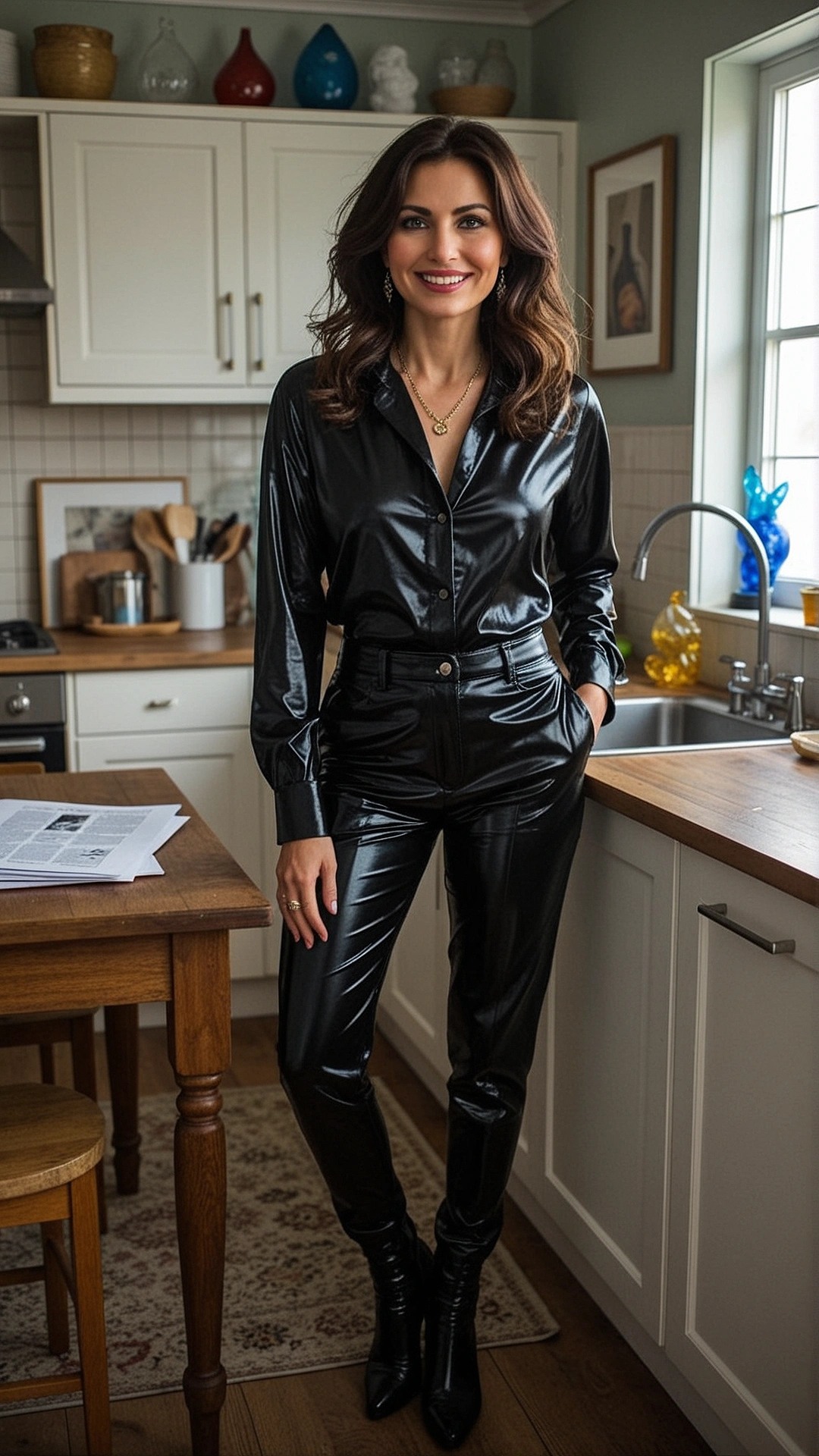
The Capital You Already Have
Five Businesses You Could Begin Tonight With Almost No Money — And Why Your Decades of Experience Are Worth Far More Than You’ve Ever Been Told
You may not need more money, darling. You may simply need to recognise what you already know how to do — and the extraordinary truth about why being a mature woman isn’t a disadvantage in business, but the most valuable asset you possess
The Introduction That Changes Everything
Let me tell you about a sentence that has quietly killed more business ideas — more dreams, more possibilities, more futures — than economic downturns, market crashes, and failed ventures combined.
“I’d love to start something of my own, but it would cost too much.”
If you’ve ever said this — or thought it, or felt it in the quiet moments when you allow yourself to imagine what you might build if only you had the resources — then I need you to read every single word that follows.
Because I’m going to show you something that might change how you see yourself forever.
You see, there’s a particular kind of capital that doesn’t show up in bank statements, isn’t measured by credit scores, and can’t be quantified by traditional financial metrics. It’s the capital that has been quietly accumulating in your life for decades — through every job you’ve held, every challenge you’ve navigated, every relationship you’ve built, every mistake you’ve learned from, and every piece of wisdom you’ve gathered along the way.
Experience is capital, darling.
And yours may be worth considerably more than you think.
In this comprehensive guide, we’ll explore five distinct businesses that a skilled woman could begin with almost no financial investment — businesses built not on money, but on the extraordinary assets you’ve already accumulated: your judgement, your taste, your knowledge, your relationships, and that underrated but invaluable instinct for knowing exactly what not to do.
From becoming a specialist consultant who sells the outcome of decades of experience, to creating a premium personal service that transforms others’ chaos into calm, from teaching what you know to packaging your expertise into digital assets, to becoming the connector who knows exactly who you should speak to — each possibility begins with a simple but revolutionary question:
“What could I do with everything I already know?”
By the time you finish reading, you may discover something rather wonderful: that the woman you’ve already become is considerably more commercially valuable than the woman you’ve been telling yourself you need to become.
And that the only thing standing between you and the beginning of something extraordinary is the willingness to finally see it.
Hello, darling. Come in. Sit down. Pour yourself something nice — I’ve always found a good glass of wine makes these conversations rather more honest, don’t you?
I wanted to talk to you about something today. Something that’s been on my mind quite a lot lately, actually.
You see, I keep having the same conversation with the most extraordinary women. Women like you. Women who’ve spent decades becoming genuinely, impressively good at… well, at life, quite frankly. And somewhere along the way, almost all of them say the same thing to me.
“I’d love to start something of my own, but it would cost too much.”
And every single time, I lean forward, look them directly in the eyes, and ask the question that rather changes everything:
“Darling, what makes you think you need more money? What if you already have everything you need — you simply haven’t recognised it yet?”
Because here’s what I’ve noticed about women like us.
We spend twenty, thirty, forty years accumulating the most remarkable collection of skills, knowledge, contacts, taste, judgement and quiet expertise. We become the person everyone phones when something needs sorting. The one who knows which supplier to trust. The one who can walk into a chaotic room and instinctively see how to make it beautiful. The one whose wardrobe advice friends actually follow.
And then we sit at our kitchen tables, look at all of that, and somehow conclude that we don’t have enough capital.
As if capital only comes in the form of a bank balance.
As if everything we’ve learned, everything we’ve mastered, everything we’ve quietly become exceptional at — none of that counts.
I’ll tell you what I think, and you can tell me if I’m wrong.
I think you may be considerably wealthier than you realise.
Not in the way that shows up on a statement from your bank. In a rather more interesting way. The kind of wealth that doesn’t depreciate. The kind that actually becomes more valuable with every passing year.
Experience is capital, darling.
So are judgement, taste, knowledge, communication, organisation, relationships and that marvellous ability to solve problems that other people would rather not solve themselves.
And I have a suspicion — just a suspicion, mind you — that if you’re reading this, sitting there in your beautiful satin blouse or that gorgeous leather skirt that makes you feel exactly as confident as you ought to feel, you might possess rather more of this particular kind of capital than you’ve ever given yourself credit for.
Now, I’m not about to promise you instant wealth or some miraculous online business that will make you rich while you sleep. We’re both rather too sensible for that, aren’t we?
What I am going to do is something more interesting.
I’m going to show you five businesses you could begin with almost no capital at all.
Five possibilities that start not with a pile of money, but with a different question:
“What could I do with everything I already know?”
And somewhere in what follows, you might just discover something rather wonderful.
You might discover that the woman you’ve already become is rather more commercially valuable than the woman you’ve been telling yourself you need to become.
You might discover that decades of living well, working hard, raising families, managing complications, developing taste and accumulating wisdom have given you something rather precious.
Something that doesn’t require a warehouse, a shop front or a hundred-page business plan.
Something that simply requires you to finally recognise it.
Shall we begin?
I thought you might say yes.
You always were the clever one.
Section 1: The Reframe — Experience Is Capital
Let me tell you about a conversation I had last week.
I was having lunch with a friend — you’d like her, I think. She’s one of those women who walks into a room and everything just… settles. You know the type. The kind of woman who wears a charcoal satin blouse with such quiet authority that you find yourself sitting up straighter in her presence.
She’s spent thirty years in hospitality. Managed hotels. Trained staff. Handled crises that would make most people weep. She once told me about the time she had to relocate an entire wedding party to a different venue at two in the morning because the original hotel had a kitchen fire — and the bride didn’t find out until the next morning, because my friend made it look effortless.
And there she was, stirring her soup, telling me she’d love to start something of her own but she didn’t have the capital.
I nearly choked on my bread.
Capital? I said. Darling, you could walk into any struggling hotel in the country and add twenty percent to their bottom line before the end of the month. You have more capital than most people accumulate in three lifetimes. You simply haven’t recognised it as such.
She looked at me as though I’d said something in a foreign language.
And I think that’s the problem, isn’t it? We’ve been taught to recognise capital in only one form. Money in an account. Property. Investments. Tangible things you can point to and say, there, that’s what I’m worth.
But let me ask you something.
When you walk into a room and instinctively know how to arrange it so that people feel comfortable, where does that come from?
When you can look at a woman’s outfit and know immediately which single change would take it from fine to unforgettable, what is that?
When you know exactly which supplier will deliver on time and which one will let you down, where did that knowledge come from?
When you can read a difficult situation between two people and know precisely what to say to defuse it, what do you call that ability?
When you’ve spent decades learning what works and — perhaps more valuably — what doesn’t, what is that worth?
I’ll tell you what it is.
It’s capital, darling.
It’s just not sitting in a bank account.
Let me be clear about something, because I think this matters.
There are businesses that genuinely need significant money to start. A restaurant needs premises, equipment, staff and stock. A fashion boutique needs inventory. A manufacturing company needs machinery, materials and somewhere to put them all. I’m not suggesting for a moment that every business can be started with nothing but a good idea and a confident smile.
But — and this is rather an important but — not every business begins with a building full of things.
Some begin with a woman sitting at her kitchen table, looking at everything she has learned during the last twenty, thirty or forty years and finally asking herself a different question:
“What could I do with all of this?”
And that question, I think you’ll find, is rather more useful than the one you’ve been asking.
Because here’s what we tend to do, those of us who’ve been around long enough to know a few things.
We look at our experience and we call it just what I do. We look at our skills and we call them nothing special. We look at the things people ask us for help with and we call them obvious.
We have spent decades accumulating judgement, taste, knowledge, communication, organisation, relationships and the ability to solve problems that other people would rather not solve themselves — and we treat it all as though it were ordinary.
As though everyone could do it.
As though it weren’t worth anything.
Darling, let me disabuse you of that notion right now.
What you have is not ordinary.
What you have is the result of years — decades — of paying attention, making mistakes, learning from them, developing instincts, refining your taste, building relationships and becoming genuinely, quietly, exceptionally good at things that other people find genuinely, quietly, exceptionally difficult.
That is not ordinary.
That is capital.
And here’s where it gets rather interesting.
Because being a woman who has lived — really lived, not just existed but actually engaged with life, made choices, taken risks, learned hard lessons, developed real expertise and accumulated genuine wisdom — that’s not a disadvantage.
I know that’s not what the world tells you.
The world tells you that youth is valuable. That newness is exciting. That fresh perspectives matter more than tested ones. That you should somehow feel apologetic about the years you’ve spent becoming who you are.
The world, darling, is talking nonsense.
And I suspect you already know that.
I suspect that somewhere underneath the noise, you’ve always known that the woman you’ve become is rather more interesting than the woman you were at twenty-five. More confident. More discerning. More comfortable in her own skin. More aware of what she likes and what she doesn’t. More certain of her own taste.
You’ve had time to accumulate things.
Experience.
Mistakes — and the wisdom that comes from having made them.
Knowledge.
Contacts.
Stories.
Judgement.
Skills.
Taste.
Professional understanding.
You may even have developed a very good instinct for what not to do — and that, I can tell you, is one of the most underrated assets in the entire world of business.
Experience doesn’t merely teach us what works.
It teaches us what wastes time.
And knowing what wastes time? That can save you years.
That can save other people years too.
And people will pay for that. Handsomely, as it happens.
So here’s the reframe, and I want you to sit with it for a moment.
You may not need more money.
You may need to recognise what you already know how to do.
You may need to look at the woman you’ve become — the one with the excellent taste, the sharp instincts, the deep knowledge, the carefully cultivated relationships, the hard-won judgement — and see her clearly for perhaps the first time.
Not as someone who used to be something.
Not as someone who should apologise for her age or her experience or the particular path she’s walked.
But as someone who is, right now, sitting on a rather impressive pile of capital that simply happens to be invisible.
Until you decide to make it visible.
Until you decide to use it.
Until you ask yourself the question that rather changes everything:
“What could I do with all of this?”
Because experience is a form of capital, darling.
And yours may be worth considerably more than you think.
Shall we look at what you might actually do with it? I thought so. Let’s continue…
Section 2: Business 1 — The Specialist Consultant
Right then. Let’s begin with what I think is perhaps the most elegant of all the possibilities.
I want you to imagine something for me.
Imagine a woman — and she might be rather like you, actually — who has spent twenty-five years managing premium retail stores. Beautiful boutiques, perhaps. The kind of places where the lighting is soft, the service is impeccable and the customers leave feeling rather more glamorous than when they arrived.
Now. How does she describe herself?
If she’s like most of the women I know, she says: “I’m a former shop manager.”
And that’s true, as far as it goes.
But darling, it doesn’t go nearly far enough.
Because what she actually is — what she’s become over those twenty-five years — is someone who understands customer experience at a level that would make most business consultants weep with envy. She knows how to train staff so they actually want to perform. She knows how to arrange a sales floor so that customers move through it like water finding its natural course. She understands why customers return to one shop and never visit another — and it’s rarely about the products. She knows how to handle difficult employees without losing their respect. She knows how to manage demanding customers without losing her own composure.
She has probably watched hundreds — hundreds — of sales conversations. She knows what makes some of them work and what makes others fall apart like a cheap hem.
And she looks at all of that and calls herself a former shop manager.
Darling, I can’t.
Here’s the reframe, and it’s a subtle one, but I want you to feel the weight of it.
She isn’t selling her time.
She is selling the outcome of her experience.
Do you feel the difference? Let me say it again, because I think it matters.
She isn’t saying: “I will work for you by the hour, doing the things I used to do.”
She is saying: “I have spent twenty-five years learning what makes retail businesses succeed and fail. I can walk into your shop, see things you can’t see because you’re too close to them, and help you fix them.”
That’s not a job description.
That’s a solution.
And solutions, darling, are worth considerably more than time.
Now, let me tell you what she could offer.
She could approach independent retailers — the ones who are struggling, the ones who are doing fine but suspect they could be doing better, the ones who know something isn’t working but can’t quite identify what — and she could say:
“I help independent boutiques improve customer experience, staff performance and sales.”
That’s it. That’s the whole offer.
Notice what she hasn’t said.
She hasn’t said: “I’m looking for a job.”
She hasn’t said: “I used to be a shop manager and I’m hoping someone will hire me.”
She hasn’t apologised for her age, her experience or the fact that she’s starting something new.
She has said: “I have something you need. I can solve a problem you have. And I can do it better than almost anyone else because I’ve spent twenty-five years learning how.”
That, darling, is a consultant.
And here’s the beautiful thing about this particular business.
You don’t need to construct an impressive corporation before you discover whether anyone wants what you’re offering.
You don’t need a website with seventeen pages.
You don’t need a logo that’s been focus-grouped within an inch of its life.
You don’t need business cards printed on paper so thick it could be used as a weapon.
You need one client.
One person who has the problem you know how to solve.
One person who is willing to pay you to help them solve it.
That’s it. That’s the entire starting point.
The first question isn’t: “How do I build a consulting business?”
The first question is much simpler, and much more honest:
“Can I find one person with this problem who will pay me to help solve it?”
If the answer is yes — and I suspect, darling, that for you it might be — then something rather interesting has begun.
Now. I’m going to give you a small exercise, and I want you to actually do it. Not later. Not when you have time. Now, or at least tonight. Pour yourself a glass of something, sit somewhere comfortable — I find a good armchair and a satin cushion rather helps the thinking process, personally — and write down five things people regularly ask you for advice about.
Don’t dismiss them because they seem obvious to you.
I mean it. Don’t dismiss them.
Because here’s something I’ve noticed about women like us. The things we’re genuinely, quietly exceptional at? They feel ordinary from inside our own heads. We can’t remember a time when we couldn’t do them. We’ve been doing them so long that they’ve become invisible to us — like the air we breathe.
But what is easy for you may be precisely what somebody else struggles with.
What feels obvious to you may be the thing that keeps someone else awake at three in the morning.
What you do without thinking may be exactly what someone else would happily pay to have done.
Let me give you some examples, just to get you thinking.
Perhaps people ask you:
How do you manage to stay so organised?
How did you handle that difficult situation at work?
Where do you find these things — you always know where to find the best ones?
How do you know what to say to people?
Can you help me figure out what’s wrong with my business?
How do you always know what to wear?
Will you look at this proposal and tell me if it’s any good?
How do you manage your team so well?
Can you help me with this problem I can’t solve?
Don’t dismiss these, darling.
Each one of them is a signal.
Each one is evidence that you possess something other people value.
Each one is a small clue about where your capital — your real capital — might be hiding.
And the subjects don’t have to sound impressive.
You might be the person everyone asks about managing difficult family dynamics. You might be the one who knows how to negotiate with suppliers. You might be the one who can look at a room and know immediately how to make it work. You might be the one who understands how to care for elderly parents with grace and patience. You might be the one who knows how to run a salon, manage a team, organise a complicated event or handle a crisis without losing your composure.
None of those sound like consulting, do they?
But all of them are.
All of them are problems that someone, somewhere, is struggling with right now.
All of them are things that someone would pay to have solved.
And all of them are things you already know how to do.
I want you to feel something, if you can.
I want you to feel the shift that happens when you stop seeing yourself as someone who used to do a job and start seeing yourself as someone who knows how to solve a particular kind of problem.
The first is a CV. The second is a business.
The first looks backwards. The second looks forwards.
The first asks permission. The second offers value.
And darling, you have value.
More than you know.
More than you’ve ever allowed yourself to believe.
So tonight, or perhaps tomorrow morning when you’re sitting with your coffee, wearing something that makes you feel exactly as capable as you actually are — and you know what I mean by that, I’ve seen the way a certain satin blouse can transform not just how you look but how you carry yourself — I want you to write down those five things.
Five things people ask you for advice about.
Five things that feel obvious to you but clearly aren’t obvious to everyone.
Five clues about the capital you already possess.
And then I want you to sit with them.
Don’t judge them. Don’t dismiss them. Don’t tell yourself they’re not good enough or impressive enough or commercial enough.
Just look at them.
Look at them the way I might look at them if you showed them to me over lunch.
Look at them and ask yourself: “Is it possible that at least one of these things is something someone would pay for?”
I think you’ll find, darling, that the answer is yes.
I think you’ll find that you’ve been sitting on something rather valuable for quite some time.
And I think you’ll find that the only thing standing between you and the beginning of something rather interesting is the willingness to finally see it.
Shall we look at the next possibility? I promise you, it only gets more interesting from here…
Section 2: Business 2 — The Premium Personal Service
Now, darling, let me tell you about the second possibility, because this one — this one is where I think women like us have a rather extraordinary advantage that we almost never talk about.
I want you to think about something for a moment.
Think about the last time someone asked you to help them with something they were perfectly capable of doing themselves.
Not something they couldn’t do. Something they could do — but simply didn’t want to. Didn’t have time to. Couldn’t face. Kept putting off. Felt overwhelmed by. Looked at and thought, I know I need to deal with this, but I simply cannot.
And you stepped in. And you handled it. And you made it look easy — because for you, it was easy. And they looked at you with that particular expression. You know the one. The one that says: I don’t know how you do that, but thank God you do.
That expression, darling?
That’s the sound of a business being born.
Here’s the principle, and it’s beautifully simple once you see it.
People don’t only pay because they cannot do something.
They also pay — and they pay handsomely — because they don’t want to spend their own time doing it.
Time, darling, becomes increasingly valuable as life becomes fuller.
I know you know this. I know you feel it every single day. The weeks that used to feel spacious now feel compressed. The to-do list that used to be manageable now has items that have been on it for months. The things you’d like to do — the quiet things, the pleasurable things, the things that make you feel like yourself — keep getting pushed aside by the things that simply have to be done.
And you’re not alone in this.
Every woman I know feels it.
The successful professional who is perfectly capable of organising her wardrobe but has no desire to spend Saturday afternoon doing it. The woman who could plan her own complicated trip but would rather someone else handled the details. The person who knows she should sort out her living room but keeps looking at it and closing the door instead.
They can do these things.
They simply don’t want to.
And that, darling, is not a weakness. That’s an opportunity.
Let me tell you about a woman I know — and she might remind you of someone, perhaps even yourself.
She’s in her early fifties. Works in a demanding profession. Earns well. Has excellent taste — the kind that’s been refined over decades of paying attention, of knowing what works and what doesn’t, of understanding quality when she sees it. She wears beautiful things. Not ostentatiously, but with that quiet confidence that comes from knowing exactly who you are and what suits you.
And she was telling me, over a rather good bottle of Sancerre, that she hadn’t bought herself anything new in eight months.
Not because she couldn’t afford it.
Not because she didn’t want to.
Because the thought of going to the shops, navigating the crowds, sorting through the rails, working out what actually suited her, putting together outfits, carrying bags, making decisions after a full week of making decisions — it made her feel tired before she’d even begun.
I just want someone to do it for me, she said. I want someone who knows what I like, who understands what works on me, who can just… handle it. I’d pay anything for that.
And I thought: Darling, you’ve just described a business.
This is the category of business that requires remarkably little capital because you aren’t selling a physical product.
You are selling your ability to make somebody else’s life easier.
Think about what that actually means.
Personal shopping. Wardrobe editing. Home organisation. Travel planning. Event planning. Property presentation. Personal administration. Research. Concierge-style services.
None of these require a warehouse. None of them require inventory. None of them require premises or staff or complicated equipment.
They require you.
Your taste. Your organisational ability. Your discretion. Your experience. Your understanding of how people actually live — not how they say they live, but how they actually live, with all the complications and contradictions and chaos that entails.
Now, let me show you something, because I think this is where a lot of women go wrong.
They describe what they do instead of describing what they solve.
And the difference, darling, is everything.
Consider these two descriptions:
“I’m a personal shopper.”
And:
“I help busy women create a polished wardrobe without spending hours shopping.”
Read them again. Feel the difference.
The first one describes a task. The second one describes a solution.
The first one tells you what the person does. The second one tells you why you might give her money.
The first one sounds like a job. The second one sounds like a relief.
And relief, darling, is what people pay for.
Let me show you the same principle in a few other contexts, because I think once you see the pattern, you start to see it everywhere.
Don’t sell:
“I organise homes.”
Sell:
“I help busy households turn chaotic rooms into calm, functional spaces.”
Don’t sell:
“I plan holidays.”
Sell:
“I create beautifully organised travel itineraries for people who don’t have time to research them.”
Don’t sell:
“I do personal admin.”
Sell:
“I handle the paperwork and details that busy professionals never have time to deal with.”
Don’t sell:
“I help people downsize.”
Sell:
“I help women transition to their next chapter with a beautifully curated home that reflects who they are now, not who they used to be.”
Do you see what’s happening in each of these?
The task is not the product.
The relief is the product.
The transformation is the product.
The feeling of having something handled — properly, by someone who knows what they’re doing, by someone you can trust — that’s what people are buying.
And here’s where I think being a mature woman isn’t just an advantage. I think it’s the whole point.
Because who do you want handling the intimate, complicated details of your life?
Do you want someone young and enthusiastic but who has never actually lived? Who doesn’t understand what it’s like to manage a household, juggle competing demands, deal with difficult people, handle delicate situations?
Or do you want someone who has done all of these things? Who has decades of experience navigating complicated occasions, managing relationships, understanding what people actually need even when they can’t articulate it themselves? Who has the patience to listen carefully, the discretion to handle private matters, the taste to make beautiful decisions, the experience to know what works and what doesn’t?
Darling, it’s not even a question, is it?
Mature women possess a particularly valuable combination of qualities for this kind of work: patience, discretion, experience, taste and an understanding of how people actually live.
Not how people live in magazines. Not how people live on Instagram. How they live in reality — with all the mess and complexity and compromise that entails.
That understanding doesn’t come from a course.
It comes from decades of paying attention.
It comes from having lived.
And those qualities — those qualities, darling — don’t require a warehouse.
They don’t require a shop front.
They don’t require a single piece of equipment beyond a phone, a notebook and the kind of mind that can hold multiple threads simultaneously without losing track of any of them.
Which, let me point out, is something you’ve been doing for decades already.
You’ve been running households. Managing schedules. Anticipating needs before they’re expressed. Handling crises with grace. Remembering details that everyone else forgets. Making spaces beautiful. Making events run smoothly. Making people feel taken care of.
You’ve been doing all of this.
You just haven’t been getting paid for it.
Let me tell you one more story, because I think it illustrates something important.
I know a woman — she’s one of those people who makes everything look effortless, the kind who arrives at a dinner party looking immaculate and you know that she’s also managed to sort out three crises before she left the house, but she’d never tell you that because it would never occur to her to mention it — and she started a small business helping women organise their wardrobes.
Not styling, exactly. Not shopping, exactly. Something more nuanced than that.
She would go to a woman’s home — a woman who was successful, busy, slightly overwhelmed by the accumulation of years — and she would spend a day going through everything. Not just the clothes, but the system. How things were stored. What was being worn and what wasn’t. What worked together and what didn’t. What was being kept out of guilt and what was being kept out of genuine love.
And at the end of the day, the woman would have a wardrobe that actually functioned. Where she could see what she had. Where everything fit and flattered. Where getting dressed in the morning became a pleasure instead of a source of quiet despair.
She charged handsomely for this. And her clients told their friends. And her friends told their friends.
And she built this business not with a marketing campaign or a website or a launch event, but with a phone, a notebook, excellent taste and the willingness to say: “I can help you with that.”
Here’s what I want you to understand, darling.
The world is full of people — successful, intelligent, capable people — who are quietly drowning in the details of their own lives.
Not because they’re incompetent.
Because they’re busy.
Because they’re tired.
Because they’ve been making decisions all day and the thought of making one more — even a small one, even a pleasant one — feels like too much.
And you — you, darling, with your decades of experience, your refined taste, your organisational ability, your understanding of how people actually live — you could be the person who steps in and makes it all feel manageable.
Not by doing things they can’t do.
By doing things they don’t want to do.
By handling the details so they don’t have to.
By creating calm where there was chaos.
By creating order where there was confusion.
By creating beauty where there was… well, where there was a pile of unopened post and a wardrobe full of things that don’t fit and a calendar with three conflicting appointments next Thursday.
The task is not the product.
The relief is the product.
And you, darling, have been providing relief your entire life.
You’ve been the one who sorts things out. The one who makes things work. The one who sees the problem before it happens and quietly prevents it. The one who knows what needs to be done and does it without fuss, without drama, without needing to be thanked.
You’ve been doing this for everyone else.
Perhaps it’s time to start doing it for yourself.
For your own benefit. For your own bank account. For your own sense of satisfaction at finally being valued for the things you do naturally.
The things that feel ordinary to you.
The things that are, in fact, extraordinary.
So here’s your exercise for this section, darling.
I want you to think about the last time someone said to you: “I don’t know how you manage to do all of that.”
Or: “Could you help me sort out…?”
Or: “You always know how to handle these things.”
Or simply: “I wish I had someone who could do this for me.”
Write down five things that you do — for yourself, for your family, for friends, for colleagues — that other people find difficult, overwhelming or simply unpleasant.
Five things that you handle without thinking.
Five things that, if someone offered to handle them for you, you would pay for gratefully.
Because darling, if you would pay for it, someone else will too.
And if you can do it for yourself, you can do it for them.
And if you can do it for them, you have a business.
Shall we continue? I have a feeling the next one might resonate rather deeply…
Section 2: Business 3 — The Teacher
Now, darling, I want to talk about something that I think is perhaps the most quietly beautiful of all the possibilities we’re discussing.
And I want to begin with a story, because I think it illustrates something that I’ve been thinking about rather a lot lately.
I know a woman — and you almost certainly know someone like her, perhaps you are someone like her — who has spent thirty years making the most extraordinary celebration cakes.
I don’t mean pleasant cakes. I don’t mean quite nice cakes. I mean cakes that make people stop talking when they walk into the room. Cakes that become the thing everyone photographs before they photograph the birthday girl. Cakes that involve architectural decisions, structural engineering and a level of artistic judgement that would put many gallery curators to shame.
She’s self-taught, mostly. Learned through decades of trial and error, of ruined sponges and collapsed sugar work and icing that wouldn’t behave. She learned what works and what doesn’t through the patient, unglamorous process of simply doing it — hundreds of times, thousands of times, until her hands knew what to do before her mind had even formed the thought.
And she has never, in thirty years, thought of herself as a businesswoman.
It’s just what I do, she told me once, waving her hand as though she were discussing nothing of consequence. Anyone could do it if they practiced.
Darling.
Anyone could do it if they practiced.
Do you hear what she did there?
She took thirty years of accumulated expertise — thirty years of knowledge that most people couldn’t acquire in a lifetime of trying — and she dismissed it as something anyone could do.
As though the practicing weren’t the point.
As though the thirty years weren’t the value.
As though the knowledge she carries in her hands and her eyes and her instincts were somehow ordinary, simply because it feels ordinary to her.
And then one day, a friend said to her:
“Would you teach me how you do that?”
And she laughed. Because the idea of teaching someone seemed absurd. What did she know about teaching? She wasn’t a teacher. She’d never stood at the front of a classroom. She didn’t have a certificate or a qualification or any of the things that teachers are supposed to have.
She just… made cakes.
But her friend persisted. And eventually, somewhat reluctantly, she agreed.
And something rather wonderful happened.
She discovered that she was, in fact, an extraordinary teacher.
Not because she’d studied pedagogy. Not because she had a natural flair for public speaking. But because she knew her subject so deeply, so completely, so thoroughly — had lived inside it for so long — that she could explain it with a clarity that came from genuine understanding.
She knew where the beginners would struggle because she remembered struggling there herself, even if it was thirty years ago.
She knew which shortcuts worked and which ones were false economies.
She knew what to teach first and what to leave for later.
She knew when to push and when to let someone figure it out for themselves.
She knew, in other words, exactly what it felt like to be a beginner — because she’d been one. And she remembered the path. Every step of it.
And here’s what I want you to understand, darling, because I think it’s rather important.
You don’t have to be a university professor to teach.
You don’t need a teaching qualification. You don’t need a classroom. You don’t need a curriculum approved by anyone. You don’t need to stand at the front of a room and deliver lectures.
You simply need to know something useful and be capable of helping somebody who knows less than you.
That’s it.
That’s the entire qualification.
And I’m going to suggest something that might feel uncomfortable, but I think it needs saying: if you’ve spent decades becoming genuinely good at something — anything — you are already more qualified to teach it than most people who are currently teaching it.
Not because you have more certificates.
Because you have more understanding.
Because you’ve lived inside the subject. You’ve made the mistakes. You’ve found the solutions. You’ve developed the instincts. You know what matters and what doesn’t, what’s essential and what’s merely decorative, what actually works and what only sounds like it works.
That kind of knowledge doesn’t come from a course.
It comes from time.
And time, darling, is something you have.
Now, let me tell you what teaching can look like, because I think when we hear the word teacher, most of us picture something rather specific — a school, a chalkboard, rows of desks, a person at the front talking while everyone else pretends to listen.
But teaching has changed, darling. It’s become something far more interesting than that.
It could be:
One-to-one tuition. Just you and someone who wants to learn what you know. In a kitchen, in a studio, in a sitting room, over a glass of wine. Intimate, focused, tailored entirely to the person in front of you.
Small group sessions. Three or four people. A Saturday morning workshop. A Wednesday evening class. Something that feels more like a gathering than a lesson.
Workshops. A full day, or a weekend. A chance to go deep into a subject. To actually do the thing, not just talk about it. To send people home with something they’ve made or learned or understood.
Online lessons. One-to-one, via video. You in your beautiful sitting room, them in theirs. No travel, no premises, just knowledge shared across the miles.
Downloadable guides. Write down what you know. Structure it. Make it beautiful — and darling, you know I have feelings about making things beautiful. Sell it as a PDF. Let people learn from you while you sleep.
Recorded courses. Film yourself doing what you do. Explain as you go. Edit it into something polished and professional. Sell it to people all over the world.
Mentoring. Not teaching a subject, exactly. Teaching a person. Helping someone navigate the path you’ve already walked. Offering the guidance you wish someone had offered you.
Practical demonstrations. Showing people how to do something by actually doing it in front of them. Letting them watch. Letting them learn through observation rather than instruction.
Do you see how varied that is?
Do you see how many different forms teaching can take?
And do you see how many of them require nothing more than you, your knowledge and a willingness to share it?
Now, let me tell you something about why I think mature women are particularly extraordinary teachers, because I don’t think this is talked about enough.
Many experienced women underestimate what they know because they learned it gradually.
Not in a crash course. Not in a degree programme. Not in a concentrated burst of study. Over years. Over decades. Bit by bit, piece by piece, lesson by lesson, mistake by mistake.
And because it happened so slowly, because it accumulated so gently, it doesn’t feel like knowledge. It feels like just the way things are. It feels like common sense. It feels like nothing special.
But darling, it’s not nothing special. It’s the result of years of paying attention, of caring enough to get it right, of being willing to learn from mistakes rather than repeat them.
And here’s the thing that I think is rather beautiful.
You have forgotten how complicated it once seemed.
You’ve forgotten the first time you tried to do whatever it is you do, and how impossibly difficult it felt. You’ve forgotten the confusion, the frustration, the sense that you would never understand it. You’ve forgotten the specific moments when things clicked into place, when the knowledge shifted from something you had to think about to something you simply knew.
But the person you would teach? They haven’t forgotten.
They’re living it right now.
They’re standing exactly where you stood thirty years ago, looking at the same mountain, feeling the same overwhelm, thinking the same thought: I’ll never be able to do this.
And you — you, darling — you are the person who can look them in the eye and say: I know exactly how you feel. I felt the same way. And I’m going to help you get through it.
That, I think you’ll find, is rather powerful.
That is precisely why you can be a good teacher.
Not because you know everything.
Because you’ve walked the path.
Let me tell you about another woman I know, because I think her story illustrates something important.
She’s a retired solicitor. Spent thirty-five years in property law. Knew the field inside out, backwards and sideways. Could spot a problem in a contract before she’d finished reading the first paragraph.
And when she retired, she started doing something rather interesting.
She started teaching first-time buyers — young couples, mostly, who were navigating the property market for the first time and were completely overwhelmed — what they actually needed to know.
Not a law course. Not a qualification. Just the practical, hard-won knowledge that comes from thirty-five years of watching people make the same mistakes over and over again.
She ran small workshops. Saturday mornings. A comfortable room, good coffee, a handful of nervous young people who didn’t know the difference between freehold and leasehold and were too embarrassed to ask their solicitor.
And she would sit there, elegant and calm and reassuring, and she would explain things in a way that made everyone feel that the confusion was normal, that the overwhelm was expected, and that the path through it was manageable.
She wasn’t teaching law.
She was teaching confidence.
She was teaching the specific kind of confidence that only comes from someone who has been where you are and made it through to the other side.
And her workshops were always full. Always. Because there is an enormous hunger for this kind of teaching — the kind that comes not from a textbook but from a life.
Now, I want you to think about something, and I want you to be honest with yourself.
What do you know how to do that someone else has recently asked you to explain?
Not formally. Not in a classroom. Just in the ordinary course of life.
Perhaps a friend asked you how you manage to cook such effortless dinner parties.
Perhaps a colleague asked you how you handle difficult conversations with such grace.
Perhaps a younger relative asked you how you knew which house to buy, which investment to make, which job to take, which relationship to walk away from.
Perhaps someone watched you do something — arrange flowers, write a letter, negotiate a deal, calm a crisis — and said: “Could you show me how to do that?”
That question, darling?
That question may be more commercially useful than a personality test.
Because what it tells you is this: someone has already identified something you do that has value. They’ve seen it. They’ve named it. They’ve asked for it.
And if one person has asked, I promise you, others are wondering the same thing.
Here’s what I want you to feel, if you can.
I want you to feel the shift that happens when you stop seeing your knowledge as nothing special and start seeing it as something that could genuinely help someone.
Not because it’s impressive.
Because it’s useful.
Because it’s been tested.
Because it comes from experience, not from theory.
Because it’s the kind of knowledge that can’t be googled — the kind that lives in the spaces between the facts, in the instincts, in the judgement, in the knowing of what to do when the textbook answer doesn’t quite fit the situation.
That kind of knowledge is rare, darling.
That kind of knowledge is valuable.
And you have more of it than you think.
So here’s your exercise for this section.
I want you to write down five things you know how to do that someone has, at some point, asked you to explain.
They don’t have to be impressive. They don’t have to be professional. They don’t have to be things you learned in a course or a degree or a training programme.
They just have to be things you know.
Things you’ve done long enough, well enough, consistently enough that someone else — someone who doesn’t know how to do them — looked at you and thought: I wish I could do that.
And then I want you to sit with that list.
And I want you to ask yourself: Is it possible that at least one of these things is something that someone would pay to learn?
Not because you’re a teacher.
Because you’re someone who knows.
And knowing, darling — real knowing, the kind that comes from decades of living and doing and paying attention — is something that people will always, always value.
Shall we look at the next possibility? I have a feeling you might find this one particularly intriguing…
Section 2: Business 4 — The Boutique Digital Business
Now, darling, I want to talk about something that I think is rather exciting, and I want to begin with a question that I think might surprise you.
What if you only had to do the work once?
I mean that. What if you could take everything you’ve learned — every lesson, every system, every piece of hard-won knowledge that you’ve accumulated over decades — and instead of selling it one hour at a time, one client at a time, one conversation at a time, you could package it into something that could be sold again and again and again?
Something that didn’t require your presence.
Something that didn’t require your time — at least not once it was created.
Something that could be bought by someone in London at three in the afternoon and by someone in Sydney at three in the morning, and you wouldn’t need to be awake for either transaction.
Does that sound rather appealing?
I thought it might.
Let me tell you about a woman I know, because her story illustrates something I think you’ll find rather interesting.
She’s been organising weddings for twenty years.
Not the kind of weddings you see on television — the ones with the enormous budgets and the celebrity guests and the drama. The real kind. The kind where the budget is finite, the mother of the bride has opinions about everything, the weather is a constant source of anxiety, and something always, always goes wrong at the last minute.
She’s handled hundreds of them. She knows weddings the way a conductor knows an orchestra — not just the individual instruments, but how they work together, what happens when one falls out of time, how to bring everything back into harmony when it all threatens to fall apart.
And for twenty years, she’s sold that knowledge one wedding at a time. One client at a time. One season at a time.
Which is wonderful, but also — and I think you’ll understand this — somewhat exhausting.
Because there’s a limit, isn’t there? A limit to how many weddings one person can organise in a year. A limit to how many clients you can serve. A limit to how many hours there are in a day, a week, a season.
And she was hitting that limit. Not because she wasn’t good at what she did — she was extraordinary at what she did — but because the model itself had a ceiling. The only way to earn more was to work more. And she was already working as much as any human being reasonably could.
And then she did something rather clever.
She stopped and looked at everything she’d learned over twenty years — all the systems, all the checklists, all the knowledge that she carried in her head and applied without thinking — and she realised something.
She had developed a system.
Not a vague, informal sense of how to do things. An actual, structured, tested, proven system. The kind that could be written down. The kind that could be taught. The kind that could be handed to someone else and they could follow it and get results.
Guest lists and how to manage them.
Budgets and how to allocate them.
Supplier schedules and how to coordinate them.
Timelines and how to construct them.
Questions to ask venues — and, more importantly, questions that nobody thinks to ask venues until it’s too late.
Things brides forget. (Oh, darling, the things brides forget. She could write a book about the things brides forget. In fact, she essentially did.)
Things couples spend too much money on. (A list, she told me, that was considerably longer than the list of things they should spend money on.)
Things that go wrong. (And how to prevent them. And how to handle them when prevention fails.)
All of that — all of it — was knowledge she’d been giving away one wedding at a time, when it could have been something else entirely.
So she sat down and she packaged it.
Not a book, exactly. Not a course, exactly. Something in between. Something structured and beautiful and genuinely useful. Something that took all of that twenty years of experience and organised it into a form that someone else could actually use.
She called it The Elegant Wedding Planning System.
And suddenly — suddenly, darling — something rather extraordinary had happened.
Decades of experience had become something that could be packaged.
Something that could be sold not once, but many times.
Something that didn’t require her to be present.
Something that could earn money while she was organising someone else’s wedding. While she was having lunch with a friend. While she was sleeping.
She had moved from selling her time to selling an asset.
Now, I want to be very honest with you about something, because I think honesty is rather important here, and I think there’s a particular kind of dishonesty in this space that I find quite troubling.
There are people out there — and you’ve probably encountered them, the ones with the slick websites and the too-good-to-be-true promises — who will tell you that digital products are a path to passive income. That you create something once and then sit back and watch the money roll in while you do nothing. That you’ll be earning while you sleep, earning while you holiday, earning while you live a life of complete leisure.
Darling, I don’t want to be unkind, but that’s nonsense.
Digital products still need to be created. And creating something genuinely good — something that actually helps people, something that delivers real value, something that people will be glad they bought — takes time, effort, care and genuine expertise.
Digital products still need to be marketed. You can create the most extraordinary thing in the world, but if nobody knows it exists, nobody will buy it. Finding your audience, reaching them, convincing them that what you have is worth paying for — that’s work. Real work. Ongoing work.
Digital products still need to be updated. The world changes. Information goes out of date. Systems need refining. Customer questions need answering. Technology shifts and suddenly your beautifully designed PDF doesn’t display properly on the new devices.
Digital products still need to be supported. People will have questions. People will need help. People will encounter problems you didn’t anticipate, and you’ll need to be there to help them through it.
This is not passive income that magically appears.
I want to be very clear about that.
But — and this is a rather important but — the underlying idea is still powerful.
Because even with all of that work, even with all of the effort that goes into creating, marketing, updating and supporting a digital product, there is something fundamentally different about this model.
Your knowledge doesn’t have to be sold one hour at a time.
You can create something once and sell it many times.
You can reach people you could never reach in person — people in other cities, other countries, other continents.
You can earn from the same piece of work more than once.
And that, darling, is a rather different kind of business.
Now, let me tell you what this might look like, because I think when you see the range of possibilities, you start to understand just how flexible this idea is.
It might be:
A guide. Something structured, written, comprehensive. How to Choose the Perfect Wardrobe for Your New Life. The Complete Guide to Organising a Household That Actually Works. Everything I Wish I’d Known About Caring for Elderly Parents. Whatever you know, structured into something that someone else can follow.
A workbook. Not just information, but exercises. Questions. Prompts. Things that help someone actually do the work, not just read about it. Something that takes them from where they are to where they want to be.
A collection of templates. The actual documents you use to organise your life or your business — adapted, generalised, made useful for others. Budget templates. Planning templates. Checklists. The kind of thing that saves someone else hours of starting from scratch.
A specialist checklist. Something very specific, very targeted, very useful. The Complete Pre-Event Checklist. Everything You Need to Consider Before Downsizing. The Questions to Ask Before You Sign That Contract. Small, focused, genuinely helpful.
A digital planner. Something beautiful — and darling, you know how I feel about making things beautiful — that helps someone organise their life, their year, their project. Designed with the kind of taste and understanding that only comes from having actually lived.
An educational resource. Something that teaches a specific skill in a structured way. Not a full course, perhaps, but a focused resource that helps someone learn something useful.
A paid newsletter. Regular, valuable content delivered to people who value what you know. A weekly or monthly sharing of your expertise, your insights, your observations. Something that builds a relationship over time.
A course. Something more comprehensive. Structured lessons. Modules. A genuine learning experience that takes someone from beginning to end of a subject you know intimately.
A specialist database. A collection of information that’s hard to find elsewhere. Suppliers you trust. Contacts you’ve built over decades. Resources you’ve gathered through years of experience. (Though darling, do be thoughtful about this one — some relationships are private, and trust is a currency you don’t want to devalue.)
Photography or design assets. If you have a creative eye — and I suspect you might, if you’re drawn to the aesthetic life — you might create beautiful things that other people can use. Textures. Backgrounds. Design elements. The kind of thing that makes other people’s work more beautiful.
A collection of professional resources. The tools, documents, systems and frameworks you’ve developed over years, packaged in a way that others can adapt and use.
Do you see the range?
Do you see how many different forms this can take?
And do you see how many of them require nothing more than your knowledge, your experience and a willingness to share it in a structured way?
Now, I want to point out something that I think is rather important, because I think it’s where a lot of people go wrong with this idea.
The important thing is not to start with the question:
“What digital product should I sell?”
That’s the wrong question, darling. That’s starting from the product and working backwards, and it almost always leads to creating something that nobody actually wants.
Start with:
“What problem can I solve once and package intelligently?”
Do you feel the difference?
The first question starts with you — what you want to make, what you think might sell, what you’ve seen other people doing.
The second question starts with them — the people who have a problem, who are struggling with something, who would be grateful for a solution that actually works.
The first question leads to products that sit unsold in a digital warehouse somewhere.
The second question leads to products that people want. Products that help. Products that are worth paying for because they genuinely make someone’s life easier, better, more organised, more beautiful.
Let me give you another example, because I think this one might resonate with some of you.
I know a woman who spent years — decades — developing a system for managing her household. Not a rigid system, not a military operation, but a sensible system. A way of keeping track of everything that needed to be tracked, of making sure nothing fell through the cracks, of managing the endless complexity of running a home and a family and a life without losing your mind in the process.
And she did it so well, so quietly, so consistently, that her friends started asking her how she managed it. How she always seemed to have things under control. How she could lay her hands on any document, remember any appointment, handle any crisis without the sense of chaos that seemed to characterise everyone else’s life.
And for years she said: “Oh, I don’t know, I just have a system.”
And then she realised: I DO have a system. A real one. One that works. One that other people could use.
So she wrote it down. She structured it. She made it beautiful — because she’s the kind of woman who believes that even the practical things in life should have a certain elegance to them. She created templates and checklists and planners and guidance notes, all wrapped up in something that felt less like a manual and more like a gift from a wise friend.
And she sold it.
Not to millions of people. Not to the kind of audience that the internet gurus tell you that you need. To a small, devoted group of women who had been struggling with exactly the problem she had solved in her own life, and who were grateful — genuinely, deeply grateful — to have found something that actually worked.
That, darling, is a boutique digital business.
Not vast. Not impersonal. Not trying to reach everyone.
Just something genuinely useful, created by someone who genuinely knows, for people who genuinely need it.
And here’s what I think is rather beautiful about this particular kind of business.
It allows you to take everything you’ve learned — everything that’s accumulated in your head and your hands and your instincts over decades of living — and give it a form.
A form that can be shared.
A form that can be valued.
A form that can be paid for.
Not your time. Not your presence. Not your availability between certain hours on certain days.
Your knowledge. Your system. Your solution.
Packaged into something that carries your particular understanding, your particular taste, your particular way of seeing the world.
Something that is unmistakably yours.
Something that could only have been created by someone who has lived exactly the life you’ve lived, learned exactly the things you’ve learned, made exactly the mistakes you’ve made and found exactly the solutions you’ve found.
That, darling, is rather extraordinary.
That is something that cannot be replicated.
That is something that cannot be outsourced.
That is something that has value — real, genuine, lasting value — precisely because it comes from you.
So here’s your exercise for this section, and I want you to think about it carefully.
I want you to ask yourself: What do I know that I could package?
Not what could you teach one-to-one. Not what could you consult on. Not what could you do as a personal service.
What do you know that could be structured? Written down? Organised into something that someone else could follow without you being there?
Perhaps it’s a system you’ve developed for managing something complicated.
Perhaps it’s a collection of knowledge about a subject you understand deeply.
Perhaps it’s a set of templates or tools that you use yourself and that others could adapt.
Perhaps it’s a way of doing something that you’ve refined over years and that works better than anything you’ve seen elsewhere.
Perhaps it’s simply the answer to a question that you find yourself answering over and over again — the same question, from different people, in different contexts, but always essentially the same.
Write down five things you know that could be packaged.
Don’t worry about whether you know how to create a digital product. That’s the easy part, frankly. The technology exists. The tools are available. The formats are accessible.
The hard part — the valuable part — is knowing something worth packaging.
And darling, you already have that.
You’ve had it for years.
You just haven’t recognised it as an asset.
Let me ask you something, and I want you to sit with the question for a moment.
If you could create something — one thing, just one — that captured everything you know about a subject you understand deeply, and if that something could be bought by someone who needed that knowledge, someone who was struggling with exactly the problem you’ve already solved…
…what would it be?
What would you call it?
What would be inside it?
Who would buy it?
Why would they be glad they did?
Write down your answers. Don’t overthink them. Don’t judge them. Don’t tell yourself they’re not good enough or big enough or impressive enough.
Just write.
Because somewhere in those answers, darling, might be the outline of something rather remarkable.
Something that takes everything you’ve learned and gives it a form that can be shared.
Something that moves you from selling your time to selling your knowledge.
Something that could exist in the world and do good in the world and earn money in the world — all at the same time.
Something that is, unmistakably, yours.
Shall we look at the final possibility? I have a feeling it might be the most unexpected of all…
Section 2: Business 5 — The Connector
Now, darling, I’ve saved the most unexpected possibility for last, because I think this is the one that most women overlook entirely. And I think that’s rather a shame, because for some of you — and you’ll know if this is you by the time I finish talking — this might be the most natural fit of all.
I want to talk about something that isn’t a skill, exactly. Isn’t a service, exactly. Isn’t a product, exactly.
It’s something more subtle than that.
More invisible.
More valuable, perhaps, than any of the others.
I want to talk about who you know.
Let me ask you something, and I want you to think about it carefully before you answer.
When someone has a problem — a real problem, something they can’t solve themselves — what do they actually need?
Sometimes they need knowledge. Sometimes they need a service. Sometimes they need a product.
But very often, darling, what they actually need is the right person.
The right person to fix the thing that’s broken.
The right person to handle the situation that’s beyond them.
The right person to provide the service they can’t provide for themselves.
The right person to advise them on the decision they can’t make alone.
And the question is: who knows where to find that person?
Who knows who’s good at what?
Who knows who’s reliable and who’s all talk?
Who knows who’s available and who’s booked until next year?
Who knows who charges fairly and who charges astronomically?
Who knows who would be perfect for this particular situation, with these particular requirements, at this particular budget?
I’ll tell you who knows, darling.
You know.
I want you to think about something for a moment, and I want you to be honest with yourself.
Think about the last time someone came to you with a problem — not a problem you could solve yourself, but a problem that required someone else — and you said, without hesitation:
“I know exactly who you should speak to.”
Not “I’ll ask around.”
Not “I’ll see if I can find someone.”
Not “Have you tried looking online?”
But: “I know exactly who you should speak to.”
And you said it with that particular confidence. You know the one. The confidence that comes from knowing. Not guessing. Not hoping. Knowing. Because you’ve watched this person work. Because you’ve seen what they can do. Because you understand, from years of paying attention, that this person is genuinely, quietly, reliably good at what they do.
How often does that happen, darling?
How often does someone come to you because they know you’ll know?
I’m going to suggest something, and I think you might find it surprising.
I think it happens more often than you realise.
I think you’ve been doing this for years — connecting people, making introductions, pointing people in the right direction, quietly putting the right people in touch with each other — and you’ve been doing it for free.
Because that’s just what you do.
Because that’s what you’ve always done.
Because you’re the one who knows everyone, and you’ve never thought of that as something valuable.
You’ve thought of it as just… being helpful.
Darling.
Being helpful is valuable.
Being helpful is, in fact, the foundation of an entire category of business.
Let me tell you about a woman I know, because I think her story illustrates something important.
She’s in her early sixties. Retired from a career in the arts — not a famous career, not a headline career, but a career that involved decades of working with creative people, organising events, building relationships, and developing an extraordinarily detailed knowledge of who was good at what in her particular corner of the world.
And when she retired, she assumed that knowledge was… well, retired too. Filed away. No longer useful to anyone.
But what she hadn’t noticed was that people were still calling her.
Still asking: “Do you know someone who could…?”
Still saying: “I need someone to handle this, and I thought of you because you always know the right person.”
Still treating her as the node — the point through which connections flowed — even though she no longer had the job that had given her the connections in the first place.
And she started to notice something.
The calls weren’t stopping.
In fact, if anything, they were increasing. Because the people she’d worked with over the years had gone on to other things, and they remembered her. They remembered that she knew. They remembered that she could be trusted to recommend the right person — not the person who paid the biggest commission, not the person who was most convenient, but the person who was actually right for the job.
And one day, a friend said to her: “You know, you should charge for this.”
And she laughed. Because the idea of charging for knowing people seemed absurd. What kind of business is that? You can’t charge for knowing people, can you?
Can you?
Darling, let me tell you something.
There are entire industries built on this.
Recruitment. Professional introductions. Business networking. Sourcing. Referrals. Partnership development. Specialist connections.
All of them are, at their heart, the same thing: knowing who’s good at what, knowing who needs what, and bringing them together.
That’s it.
That’s the entire business.
And the people who do it well — the people who are genuinely, consistently, reliably good at it — are worth their weight in gold.
Because the world is full of people who need things and people who provide things, and the gap between them is often enormous. The person who can bridge that gap — who can say “I know exactly who you need” and be right — is providing a service that is genuinely, lastingly valuable.
Now, I want to describe something to you, because I think you might recognise it.
Some people are natural connectors.
They know who is good at something. Not because they’ve researched it. Because they’ve noticed it. Over years. Over decades. They’ve been paying attention while other people were busy doing other things.
They know who needs something. Not because anyone has told them. Because they listen. They remember conversations. They notice what people are struggling with. They file away, quietly and without effort, the details of what people are looking for.
They notice opportunities. They see that Person A has a problem and Person B has a solution and they would never find each other without someone to introduce them. And they think: I could fix that.
They introduce people. Not randomly. Not carelessly. With thought. With consideration. With an understanding of both sides — what each person needs, what each person can offer, whether the connection would actually work.
And over the years, they accumulate something extremely valuable.
A network.
Not a list of contacts. Not a database of names. A network — a living, breathing web of relationships built on trust, on mutual respect, on years of being the person who could be relied upon to know.
And here’s where I think being a mature woman is not just an advantage but the whole foundation of this kind of business.
Because a network like this doesn’t happen overnight.
It doesn’t happen in a year.
It doesn’t happen from attending a few networking events and collecting business cards.
It happens over decades.
It happens from years of working alongside people and learning who’s genuinely good and who’s merely adequate.
It happens from years of socialising and learning who’s interesting and who’s predictable.
It happens from years of being part of a community and learning who gets things done and who only talks about getting things done.
It happens from years of watching people in different contexts — under pressure, in success, in failure, in crisis — and learning who you can trust and who you can’t.
A mature woman may have spent decades developing professional, social and community relationships.
She may know:
The accountant who is genuinely brilliant at helping small businesses — and the one who is merely competent.
The designer who can transform a space on a limited budget — and the one who charges a fortune for predictable work.
The solicitor who actually explains things in plain English — and the one who hides behind jargon.
The photographer who captures people as they really are — and the one who produces technically proficient but emotionally empty images.
The property expert who knows the hidden gems — and the one who only knows what’s on the obvious websites.
The business owner who is looking for exactly the kind of help that someone else she knows provides.
The event organiser who can work miracles with a modest budget — and the one who needs a fortune to produce anything decent.
The person who knows everyone — and the person who quietly gets things done.
Her address book, darling, may contain more latent value than her filing cabinet.
More value than her savings account.
More value than anything she could put on a CV.
Because what she has isn’t just a list of names.
She has knowledge about those names. She knows who’s good. She knows who’s reliable. She knows who’s worth recommending and who isn’t. She knows who would suit whom, who would work well together, who would be a disaster together.
That knowledge is valuable.
That knowledge is a business.
Now, I want to talk about something important, because I think it matters and I don’t want to gloss over it.
The ethical foundation of this kind of business is everything.
Trust is the currency here, darling. Not money. Trust.
A connector who recommends somebody unsuitable — someone who doesn’t deliver, who overcharges, who behaves badly — quickly stops being useful. And worse than that, they stop being trusted. And once trust is gone, the business is gone. There’s no recovery from it.
So this isn’t a business for someone who wants to make a quick profit by recommending whoever pays the biggest referral fee.
This is a business for someone who genuinely cares about getting it right.
Someone who takes the responsibility of an introduction seriously.
Someone who would rather say “I don’t know the right person for this” than make a bad recommendation.
Someone who understands that every introduction they make is a reflection of their reputation — and who guards that reputation with the care it deserves.
And darling, I’m going to suggest something: if you’re the kind of woman I think you are — the kind of woman who has spent years being the person everyone comes to, the person who knows — then you already have this ethic. You’ve been doing it for free, for years, because you care about getting it right. Because you wouldn’t recommend someone you didn’t trust. Because your name means something, and you protect it.
That ethic isn’t something you need to learn.
It’s something you already have.
And it’s the foundation of a business.
Let me tell you what this might look like in practice, because I think when you see the range of possibilities, you start to understand how flexible this is.
It might be:
Recruitment. Helping businesses find the right people. Not as a large agency, but as a specialist — someone who knows a particular industry, a particular type of role, a particular kind of candidate. The person who says: “I know exactly the person for this position.”
Professional introductions. Connecting professionals who need each other — the lawyer who needs the accountant, the designer who needs the photographer, the consultant who needs the writer. The person who sees the connections that others miss.
Sourcing. Finding things that are hard to find. The right supplier. The right material. The right venue. The right service. The person who says: “I know where you can get that.”
Referrals. Being the trusted intermediary — the person whose recommendation carries weight because it’s never given lightly. The person who says: “I’ve worked with them, and they’re genuinely good.”
Partnership development. Helping businesses find the right partners. The right collaborator. The right strategic connection. The person who sees possibilities that the businesses themselves might not see.
Specialist connections. Being the person who knows a particular world — a particular industry, a particular community, a particular network — and can navigate it on behalf of others who can’t.
All of these are legitimate businesses. All of them can be built around the knowledge you already have. All of them start with the simple, powerful phrase:
“I know exactly who you should speak to.”
And there’s something else, darling. Something I think is rather beautiful about this kind of business.
There is something particularly elegant about it.
Because you aren’t necessarily creating something from scratch.
You aren’t inventing a product. You aren’t developing a service. You aren’t building something that didn’t exist before.
You are bringing existing pieces together in a useful way.
You are seeing connections that others miss.
You are putting the right person in front of the right problem.
You are making the introduction that allows something good to happen — a business to find the right employee, a client to find the right supplier, a project to find the right partner.
You are the catalyst, darling. Not the reaction itself. The thing that makes the reaction possible.
And there’s something deeply satisfying about that. Something that uses a particular kind of intelligence — not the intelligence of creating something new, but the intelligence of seeing what already exists and understanding how it fits together.
I think you might have that intelligence, darling.
I think you might have been using it for years.
I think you might have been doing it so naturally, so effortlessly, that you’ve never even noticed.
So here’s your exercise for this section, and I want you to take your time with it.
I want you to think about your address book.
Not your phone contacts. Not your social media connections. Your real address book. The one that lives in your head. The one you carry with you everywhere.
Write down:
Five people you know who are genuinely, quietly, exceptionally good at what they do. Not famous. Not flashy. Just good. Reliable. Trustworthy. The kind of person you would recommend without hesitation.
Five people you know who might need someone. Who are they? What do they need? Who might be able to help them?
Five connections you could make. Not randomly. Thoughtfully. Who do you know who should know each other? Who have you been meaning to introduce but never got around to it? Who would benefit from knowing someone you already know?
And then I want you to ask yourself:
How many times have I done this for free?
How many times have I made an introduction that helped someone?
How many times has someone said to me: “Thank you, that was exactly who I needed”?
How many times have I been the person who knew?
Darling, if the answer is “more times than I can count” — and I suspect it might be — then you have been running a business without realising it.
You’ve been providing a service without charging for it.
You’ve been creating value without capturing it.
You’ve been the connector — the node, the hub, the person who makes things happen by bringing the right people together — and you’ve been doing it out of the goodness of your heart.
And that’s beautiful, darling. That’s generous. That’s you.
But it’s also, potentially, a business.
And the only difference between what you’ve been doing for free and what you could be doing for money is the intention.
The decision to recognise what you do as valuable.
The willingness to say: I know exactly who you should speak to — and I can help you make that connection.
The understanding that the knowledge you carry — the knowledge of who’s good, who’s reliable, who’s right for what — is capital.
Invisible capital.
The most valuable kind.
So let me ask you one more question, and I want you to sit with it.
Who do you know, darling?
Not in the casual sense. Not in the Facebook sense.
Who do you really know?
Who do you know well enough to vouch for?
Who do you know well enough to recommend?
Who do you know who is genuinely, quietly, exceptionally good at what they do?
Who do you know who needs something that someone else you know could provide?
Who do you know who would benefit from knowing someone else you know?
The answers to those questions, darling, might be more valuable than you think.
They might be the outline of a business.
They might be the beginning of something that takes everything you’ve accumulated — every relationship, every conversation, every observation, every quiet judgement about who’s good and who isn’t — and turns it into something that helps people.
Something that has value.
Something that is, unmistakably, yours.
Because no one else has your network, darling.
No one else knows what you know.
No one else can make the connections you can make.
And that, I think you’ll find, is rather extraordinary.
Shall we step back and look at all five together? I think you might find the view rather illuminating…
Section 2: Summing Up — The Five Businesses Are Really Five Assets
Now, darling, let’s step back for a moment.
Let’s take a breath, pour another glass of whatever you’re drinking, and look at what we’ve just explored together. Because I think something rather interesting has happened, and I want to make sure you’ve noticed it.
We started with five businesses.
Five possibilities. Five different ways of taking what you already have and turning it into something that has value in the world.
But here’s what I want you to see — and I think once you see it, you can’t unsee it — they’re not really five businesses at all.
They’re five assets.
Five things you already possess.
Five forms of capital that have been accumulating quietly in your life for decades, waiting for you to recognise them.
Let me show you what I mean.
The Specialist Consultant — what are you really selling?
Not your time. Not your availability. Not your willingness to work.
You’re selling judgement.
The judgement that comes from having seen things go well and things go badly, from having made mistakes and learned from them, from having developed instincts that can’t be taught in a course because they can only be earned through years of doing.
And what’s the underlying asset that makes that judgement possible?
Experience.
Decades of it. Quietly accumulating. Becoming more valuable with every passing year.
The Premium Personal Service — what are you really selling?
Not your labour. Not your effort. Not your ability to perform tasks.
You’re selling convenience.
The convenience of having someone else handle the things you don’t want to handle. The convenience of delegating the details to someone who will manage them with taste and discretion. The convenience of buying back your own time by paying for someone else’s competence.
And what’s the underlying asset that makes that convenience possible?
Skill and taste.
The skill that comes from having organised complicated things for years. The taste that comes from having paid attention to what works and what doesn’t, what’s beautiful and what’s merely adequate, what makes life feel elegant and what makes it feel like a chore.
The Teacher — what are you really selling?
Not information. Not facts. Not a curriculum.
You’re selling knowledge.
Not the kind of knowledge that comes from a book. The kind that comes from having walked the path. From having been the beginner and become the expert. From having made every mistake there is to make and having found, through patience and persistence, the way through.
And what’s the underlying asset that makes that knowledge valuable?
Expertise.
Not certified expertise. Not credentialed expertise. Real expertise. The kind that lives in your hands and your eyes and your instincts. The kind that can only be acquired through time.
The Boutique Digital Business — what are you really selling?
Not a product. Not a download. Not a file.
You’re selling packaged knowledge.
Knowledge that has been structured, organised, made accessible. Knowledge that someone can use without you being there. Knowledge that carries your particular understanding, your particular way of seeing things, your particular solutions to particular problems.
And what’s the underlying asset that makes that packaging possible?
Intellectual property.
The systems you’ve developed. The methods you’ve refined. The solutions you’ve found. The frameworks you’ve created — all without realising you were creating them — simply by doing what you do, year after year, until the doing itself became a kind of art.
The Connector — what are you really selling?
Not a service. Not a product. Not even, directly, an introduction.
You’re selling opportunity.
The opportunity to find the right person. The opportunity to solve a problem that seemed unsolvable. The opportunity to connect with someone who can help — because you know who they are, and the person who needs them doesn’t.
And what’s the underlying asset that makes that opportunity possible?
Relationships.
Decades of them. Built on trust. Maintained with care. Carried in your head and your heart, not in a database. The kind of relationships that can’t be acquired quickly, can’t be faked, can’t be transferred. They can only be earned — through years of being the person who could be relied upon.
Now, let me put all of that in front of you, because I think seeing it together changes something.
| Business | What You’re Really Selling | Your Underlying Asset |
|---|---|---|
| Specialist consultant | Judgement | Experience |
| Premium personal service | Convenience | Skill and taste |
| Teacher or mentor | Knowledge | Expertise |
| Digital business | Packaged knowledge | Intellectual property |
| Connector | Opportunity | Relationships |
Do you see it, darling?
Do you see what’s really sitting in that table?
Those aren’t five businesses you need to create.
Those are five assets you already have.
You don’t need to acquire experience — you’ve been acquiring it for decades.
You don’t need to develop skill and taste — they’ve been developing quietly while you weren’t paying attention.
You don’t need to build expertise — it’s been building itself through every year of doing what you do.
You don’t need to create intellectual property — you’ve been creating it every time you solved a problem, developed a system, found a way through a complication that wasn’t in any manual.
You don’t need to cultivate relationships — you’ve been cultivating them your entire adult life, simply by being the kind of person people trust, the kind of person people come to, the kind of person who knows.
The question isn’t: “What business should I start?”
The question is: “What assets have I accumulated?”
And that, darling, is a completely different question.
It’s a question that doesn’t ask you to become someone else.
It doesn’t ask you to learn something new, to reinvent yourself, to start from scratch, to pretend you’re something you’re not.
It asks you to look at who you already are — at the woman you’ve become through years of living and working and paying attention and making mistakes and finding your way — and recognise her, perhaps for the first time, as someone who is already capitalised.
Already equipped.
Already wealthy in the ways that matter.
And this is where I want to say something that I think needs saying, even though it might make some people uncomfortable.
Because I know the world tells you that being a mature woman is something to apologise for. Something to disguise. Something to overcome with creams and procedures and clever marketing and the right angles in photographs.
The world tells you that your value diminishes with time.
That your best years are behind you.
That you should be looking backwards with nostalgia or forwards with anxiety, because the present moment — the woman you are right now — is somehow less than what came before.
Darling, I want you to hear me very clearly.
The world is wrong.
And I think, somewhere underneath the noise, you already know that.
Because here’s what the world doesn’t understand.
The world doesn’t understand that experience doesn’t depreciate. It compounds.
The world doesn’t understand that judgement doesn’t fade. It sharpens.
The world doesn’t understand that taste doesn’t diminish. It refines.
The world doesn’t understand that relationships don’t weaken. They deepen.
The world doesn’t understand that knowledge doesn’t expire. It expands.
The world is measuring the wrong things, darling. It’s measuring smoothness of skin instead of depth of understanding. It’s measuring speed of movement instead of wisdom of direction. It’s measuring novelty of appearance instead of richness of character.
And while the world has been measuring the wrong things, you’ve been accumulating the right things.
You’ve had time to accumulate things.
Experience — the kind that only comes from having been in the room, having made the decision, having lived with the consequences, having learned the lesson.
Mistakes — and I mean that as a positive, darling, because mistakes are how we learn. The woman who hasn’t made mistakes hasn’t taken risks. And the woman who hasn’t taken risks hasn’t lived.
Knowledge — not the kind that comes from books, but the kind that comes from doing. From trying. From failing. From trying again. From eventually finding the way.
Contacts — real ones. Not the kind you collect at networking events, but the kind you build through years of working alongside people, watching them under pressure, learning who you can trust.
Stories — because every experience, every mistake, every success, every complication you’ve navigated has become a story. And stories are how we teach, how we connect, how we make sense of the world. Your stories are valuable, darling. More valuable than you know.
Judgement — the ability to look at a situation and see what others miss. To know, without being able to explain exactly how you know, what’s going to work and what isn’t. To feel, in your bones, when something is right and when something is wrong.
Skills — the practical abilities you’ve developed over years. The ones that feel so natural to you that you forget they’re skills at all. The ones that other people struggle with and you handle without thinking.
Taste — the refined sensibility that comes from decades of paying attention to what’s beautiful, what’s elegant, what works. The taste that tells you, instinctively, when something is right — and when it’s merely adequate.
Professional understanding — the deep knowledge of how things actually work, not how they’re supposed to work. The kind of understanding that only comes from having been on the inside.
And perhaps the most underrated asset of all:
The knowledge of what not to do.
I want to pause on that last one, darling, because I think it’s more valuable than anyone gives it credit for.
Experience doesn’t merely teach us what works.
It teaches us what wastes time.
It teaches us which meetings don’t need to happen.
It teaches us which projects aren’t worth pursuing.
It teaches us which people can’t be relied upon.
It teaches us which opportunities are actually traps.
It teaches us which shortcuts aren’t shortcuts at all.
It teaches us which advice is sound and which advice is fashionable nonsense.
It teaches us which traditions are worth preserving and which are just habits that no one has questioned.
That knowledge — the knowledge of what to avoid — can save someone years.
Years, darling.
And people will pay for that.
They’ll pay to avoid the mistakes you’ve already made.
They’ll pay to skip the dead ends you’ve already explored.
They’ll pay to benefit from the lessons you’ve already learned.
Not because they’re lazy. Because they’re smart. Because they understand that the most expensive thing in the world is time, and that learning from someone who has already spent the time is the most efficient way to use their own.
So here’s what I want you to feel, darling, as we close this section and prepare to move on.
I want you to feel the shift.
The shift from: “What business should I start?”
To: “What assets have I accumulated?”
The shift from: “What do I need to acquire?”
To: “What do I already possess?”
The shift from: “Who do I need to become?”
To: “Who have I already become — and what is she worth?”
Because I think, when you make that shift, something rather liberating happens.
You stop looking outside yourself for permission.
You stop waiting for someone to tell you you’re ready.
You stop believing that you need more — more training, more qualifications, more money, more time — before you can begin.
You look at the woman in the mirror — the one with the experience and the judgement and the taste and the relationships and the knowledge of what not to do — and you see her clearly for perhaps the first time.
Not as someone who used to be something.
Not as someone who should apologise for her age or her experience or the particular path she’s walked.
But as someone who is, right now, sitting on a rather extraordinary collection of assets.
Assets that are invisible to everyone but you.
Assets that are waiting to be recognised.
Assets that are waiting to be used.
And being a mature woman, darling — being a woman who has lived, who has accumulated, who has become something through the sheer passage of time and the willingness to pay attention along the way — that’s not a disadvantage.
It’s the whole point.
It’s the foundation.
It’s the reason you can do what younger people can’t — not because they’re not clever, not because they’re not capable, but because they simply haven’t had the time.
You’ve had the time, darling.
And the time has been working.
Quietly. Consistently. Whether you noticed or not.
Building something.
Creating something.
Accumulating something that is, right now, this very moment, more valuable than it has ever been.
And that will be more valuable tomorrow.
And more valuable still the day after that.
So before we move on, I want you to do something for me.
I want you to close your eyes for a moment — just for a moment, just long enough — and I want you to see yourself as I see you.
Not the version you present to the world.
Not the version you worry about in the mirror.
The real version. The one who has spent decades becoming who she is. The one who carries experience and judgement and taste and knowledge and relationships and stories and the hard-won understanding of what not to do.
See her.
See how much she has.
See how much she is.
And then, darling, ask yourself the question that rather changes everything:
“What could I build with everything I know now?”
Before You Go, Darling…
Now, I know what happens next.
I’ve had this conversation enough times to know exactly how it goes.
You finish reading something like this — something that made you think, that made you sit up a little straighter, that made you look at yourself with slightly kinder, slightly more appreciative eyes — and then you close the page. And you go back to your day. And the feeling fades. And by tomorrow morning, you’ve forgotten the woman you saw in the mirror last night. The one with the experience and the judgement and the taste and the quiet, extraordinary value.
And nothing changes.
Not because you didn’t mean to.
Not because you didn’t want to.
But because you went back into a world that doesn’t see what I see. A world that measures the wrong things. A world that doesn’t remind you, every day, of what you’re actually worth.
And darling, I don’t want that for you.
I don’t want this to be a moment that fades.
I want it to be the beginning of something.
Let me tell you what I’ve learned about change.
Real change — the kind that actually happens, the kind that actually sticks — doesn’t come from a single moment of inspiration. It doesn’t come from reading one article, having one revelation, seeing yourself clearly one time in the mirror.
It comes from immersion.
It comes from surrounding yourself with voices that see you clearly.
It comes from returning, again and again, to spaces that remind you of who you are.
It comes from being part of something that holds you up when the world is trying to make you small.
And that, darling, is what I want to offer you.
You see, this article — this conversation we’ve been having — it isn’t isolated.
It isn’t a one-off.
It’s part of something larger.
Something that has been growing, quietly and deliberately, into something I’m rather proud of.
Here at GlossRealm, we’ve been creating a world.
A world for women like you.
Women who know things. Women who’ve lived. Women who have accumulated decades of experience and judgement and taste and are tired of being told that none of it counts. Women who are ready — perhaps more than ready — to be seen, to be valued, to be reminded of what they’re actually worth.
We’ve been writing stories. Articles. Pieces that explore what it means to be a woman of substance in a world that often seems to value surface above all else. Pieces about confidence. About elegance. About the particular kind of power that comes from knowing who you are and refusing to apologise for it.
And I think — I hope — you might find some of them rather wonderful.
Let me tell you what’s waiting for you.
There are stories about women like the ones I’ve described in this article. Women who started something with nothing but what they already knew. Women who discovered, sometimes late in life, sometimes after years of assuming they had nothing to offer, that they were sitting on a fortune they’d never recognised.
There are pieces about style — not the kind that tells you what’s fashionable this season, but the kind that helps you understand what works for you. What makes you feel like yourself. What communicates, without a word, the woman you’ve become.
There are articles about relationships — the real kind, not the glossy magazine kind. The kind that explores what it means to connect with people who see you, who value you, who remind you of your worth when you forget it.
There are stories about pleasure. About luxury. About the things that make life feel rich — not because they’re expensive, but because they’re appreciated. The feel of beautiful fabric against your skin. The satisfaction of a perfectly organised space. The quiet joy of being surrounded by things that are well-made and people who are well-chosen.
There are pieces about the inner life — about confidence, about self-knowledge, about the particular kind of wisdom that only arrives after you’ve lived enough to know what matters and what doesn’t.
And there are conversations. Real ones. In the comments, in the community, in the spaces where women like you gather to share what they know, to support each other, to remind each other that they are not alone.
And here’s what I want you to understand, darling.
This isn’t just content.
It isn’t just articles on a website.
It’s a world.
A world that has been built — carefully, deliberately, with genuine love — for women like you.
Women who are tired of being invisible.
Women who are ready to be seen.
Women who have spent decades becoming something extraordinary and are finally ready to recognise it.
And I want you to be part of it.
Now, let me say something about that, because I think it matters.
I’ve noticed something about the women who read what we create here.
The ones who get the most from it aren’t the ones who read one article and move on.
They’re the ones who stay.
The ones who return. Who explore. Who read the stories and the articles and find themselves nodding, finding pieces of themselves in what we’ve written, feeling that particular relief that comes from being understood.
They’re the ones who comment. Who share their own experiences. Who add their voices to the conversation and discover that their voice — their particular voice, with its particular history and its particular wisdom — is wanted here.
They’re the ones who become part of the fabric of this place. Who mention us to their friends. Who share the articles that resonated. Who become, without quite meaning to, advocates for something they believe in.
And I’ll tell you what happens to them.
They change.
Not because we’ve changed them.
Because they’ve found a place that sees them clearly, and being seen clearly — really seen, by people who understand — has a way of bringing out what was always there.
They become more confident. More willing to take the risk. More ready to recognise their own value. More prepared to do something with what they know.
They start businesses. They make changes. They have conversations they’ve been avoiding. They take steps they’ve been postponing.
And they come back here — to tell us about it. To share what happened. To be part of the ongoing story of women who are, quietly and magnificently, refusing to be small.
So here’s what I’m going to ask you, darling.
Not demand. Not require. Ask.
Because that’s how we do things here. With respect. With genuine invitation. With the understanding that you are free — completely, absolutely free — to walk away and never return.
But I’m going to ask you to stay.
Not just to read this article and close the tab.
To stay.
To explore what else is here. To read the stories. To browse the articles. To find the ones that speak to you — and I promise you, there will be some.
To join the conversations. To add your voice. To become part of something that is, I genuinely believe, rather special.
To let this be the beginning of something, not the end.
And if you find — as I hope you will — that what we’ve created here has value…
If you find that these articles make you think, make you feel, make you see yourself more clearly…
If you find that this world we’re building is one you want to be part of, one you want to help grow, one you want to ensure continues to exist…
Then I’m going to ask you something else.
I’m going to ask you to support it.
Not because we demand it. Not because we’ve put up a paywall. Not because we’re going to make you feel guilty for reading without paying.
But because you understand something that I think you already understand.
You understand that good things don’t exist by accident.
You understand that the articles you’ve just read — the ones that took time, and thought, and genuine care to create — don’t happen without support.
You understand that the world we’re building — this world for women like you, this sanctuary of seeing and being seen — requires people who believe in it enough to help it continue.
And you understand the principle of reciprocity.
The principle that says: if something gives to you, you give back.
If something enriches you, you enrich it.
If something sees you, you help it continue to see others.
It’s the same principle, darling, that underlies everything we’ve been talking about.
The consultant who gives value and receives payment.
The teacher who shares knowledge and receives gratitude.
The connector who makes introductions and receives trust.
The principle that says: value flows in both directions. That’s what makes it sustainable. That’s what makes it real.
We give you something — articles, stories, a world that sees you, a community that values you.
And if it has value to you, you give something back — your attention, your engagement, your support, your willingness to help us reach more women who need what we offer.
That’s not a transaction, darling.
That’s a relationship.
And relationships, as you know, are the most valuable thing in the world.
So here’s what I want you to do.
Not right now. Not this second. But soon.
I want you to explore.
I want you to read another article. Find a story that catches your eye. Discover something that makes you think, or feel, or see yourself differently.
I want you to join the conversation. Leave a comment. Share a thought. Add your voice to the chorus of women who are, quietly and magnificently, refusing to be invisible.
I want you to tell someone. A friend. A sister. A colleague. Someone who needs to hear what you’ve heard. Someone who needs to be seen the way you’ve been seen.
And if you find — as I hope you will — that this place has value…
If you find that it enriches your life, even in small ways…
If you find that it reminds you, on the days when the world is making you small, that you are not small…
Then I want you to support it.
Subscribe. Become a patron. Contribute what you can — what feels right, what reflects the value you’ve received.
Not because we’ve asked you to.
Because you want to.
Because you understand that the things we value need to be valued.
Because you believe, as I believe, that women like you deserve a place that sees them clearly — and you want that place to continue to exist.
And let me tell you what happens when you do.
When you support something, you become part of it.
Not just a reader. Not just an audience member. A participant. A member. A patron.
You become part of the reason this exists.
You become part of the story.
And you become connected — genuinely, lastingly connected — to something that is, I believe, rather extraordinary.
A world built for women like you.
A world that sees what the world doesn’t.
A world that values what the world undervalues.
A world that reminds you, every time you visit, of the woman you actually are.
I started this conversation by telling you that you have more capital than you realise.
I want to end it by telling you something else.
You have more value than you realise.
Not just as a potential businesswoman. Not just as someone with skills and knowledge and relationships to offer.
As a person.
As a woman who has lived and learned and become something that the world needs more of, not less.
And you deserve to be in a place that knows that.
You deserve to be surrounded by voices that remind you of it.
You deserve to be part of something that reflects it back to you.
That’s what we’re building here, darling.
And I would be honoured — genuinely, deeply honoured — if you would be part of it.
So stay a while.
Read another piece.
Join the conversation.
Become part of this world we’re creating.
And if it gives you something — as I hope it will — give something back.
Not because you have to.
Because you want to.
Because you understand that the most valuable things in life are the things we choose to support.
Because you believe, as I believe, that women like us deserve a place of our own.
And because, darling, you are worth it.
You have always been worth it.
And it’s time you were somewhere that knew it.
Welcome to GlossRealm. I do hope you’ll stay.
#BusinessIdeasForMatureWomen, #LowCapitalBusiness, #ExperienceAsCapital, #WomenInBusiness, #ConsultingBusiness, #PremiumPersonalService, #TeachingBusiness, #DigitalProducts, #NetworkingBusiness, #FemaleEmpowerment